400cc motorcycles: why the big brands are going back to mid-size
EICMA 2026 was all about bikes for the A2 licence. Why 400cc motorcycles are back in fashion, which ones you can buy today and which are coming in 2027, with a look back at the days when a 350 was the norm.
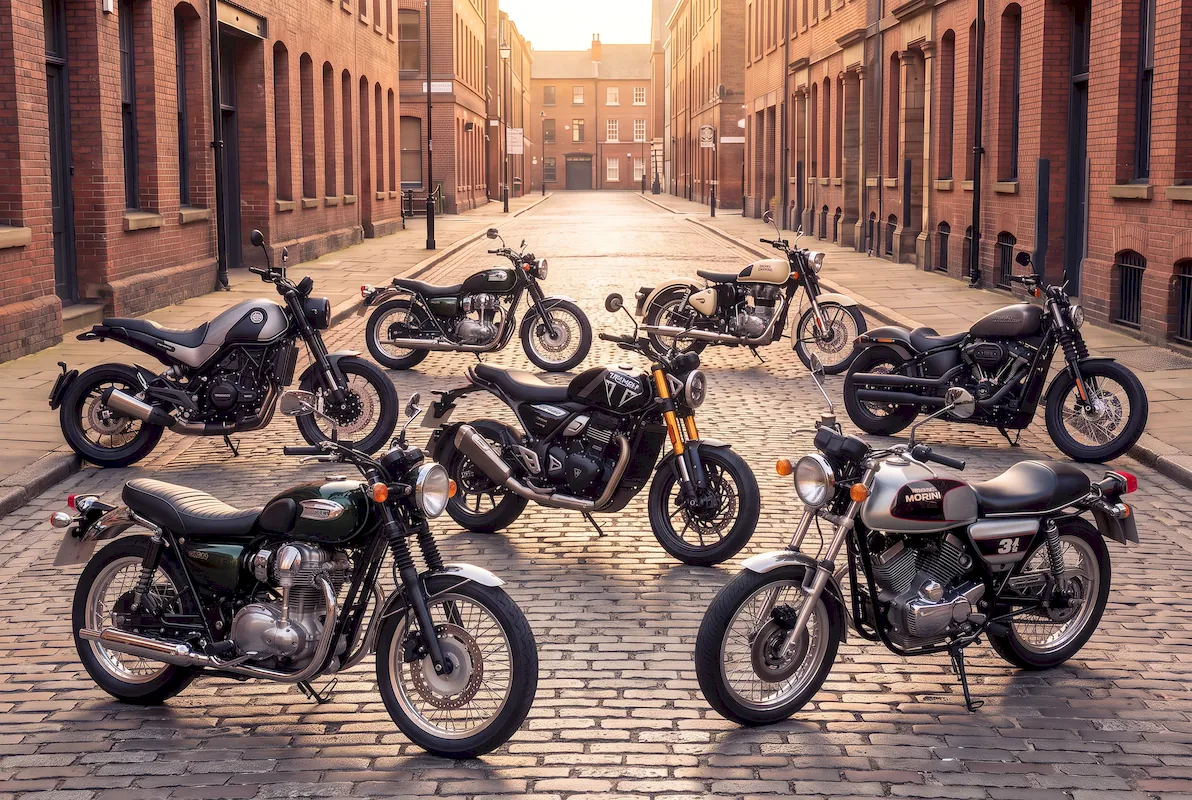
At EICMA 2026, where I spent 3 November, the common thread was the A2 licence. Honda, BMW, Triumph and Moto Guzzi all brought bikes between 400 and 500cc to Milan, and not as fillers. 400cc motorcycles are back in the spotlight, and for someone my age it feels a bit like coming home. Here is why it is happening, and what there is to buy.
When a 350 was everybody's bike
In the Seventies and Eighties a mid-size bike was not second best. It was the normal bike, the one you bought with your first pay packet and took to the seaside two-up. Honda CB400 Four, Kawasaki Z400, Yamaha RD350 and RD400, and in Italy the Guzzi V35 and the Ducati Pantah 350. Proper motorcycles that people now hunt for at classic shows.
And then there was the Moto Morini 3½, for many of us the Italian 350 par excellence. Launched in 1973 and designed by Franco Lambertini, it had a 344cc 72-degree V-twin with a toothed-belt camshaft drive, a very rare solution on motorcycles at the time. Light, slim and precise through corners, in Strada and Sport form it could hold its own against much bigger bikes.
In Italy there was a very local reason too. From the late Seventies, bikes over 350cc paid a higher rate of VAT, rising to 38%, the same as luxury goods. Those of us who were there remember it: that threshold weighed on the purchase as much as passion did, and it is no coincidence that Italian price lists were full of 350s. In Japan, from the mid-Seventies, the "medium" licence stopped at exactly 400cc.
Then the luxury VAT went, in the early Nineties, and for twenty years the mid-size class all but vanished from price lists. You went from a 125 to a 600, or straight to a litre bike. Now things have come full circle.
Why 400cc motorcycles are back
There are several reasons, and they add up. None of them would be enough on its own.
The A2 licence
This is the most obvious push. In Italy you can take the A2 at 18, and it allows bikes up to 35 kW, about 47 hp, with a power-to-weight ratio no higher than 0.2 kW per kilo. A 400 designed for this licence fits as it comes. There is no need for a restrictor kit, which on a big bike costs money and takes away some of its character.
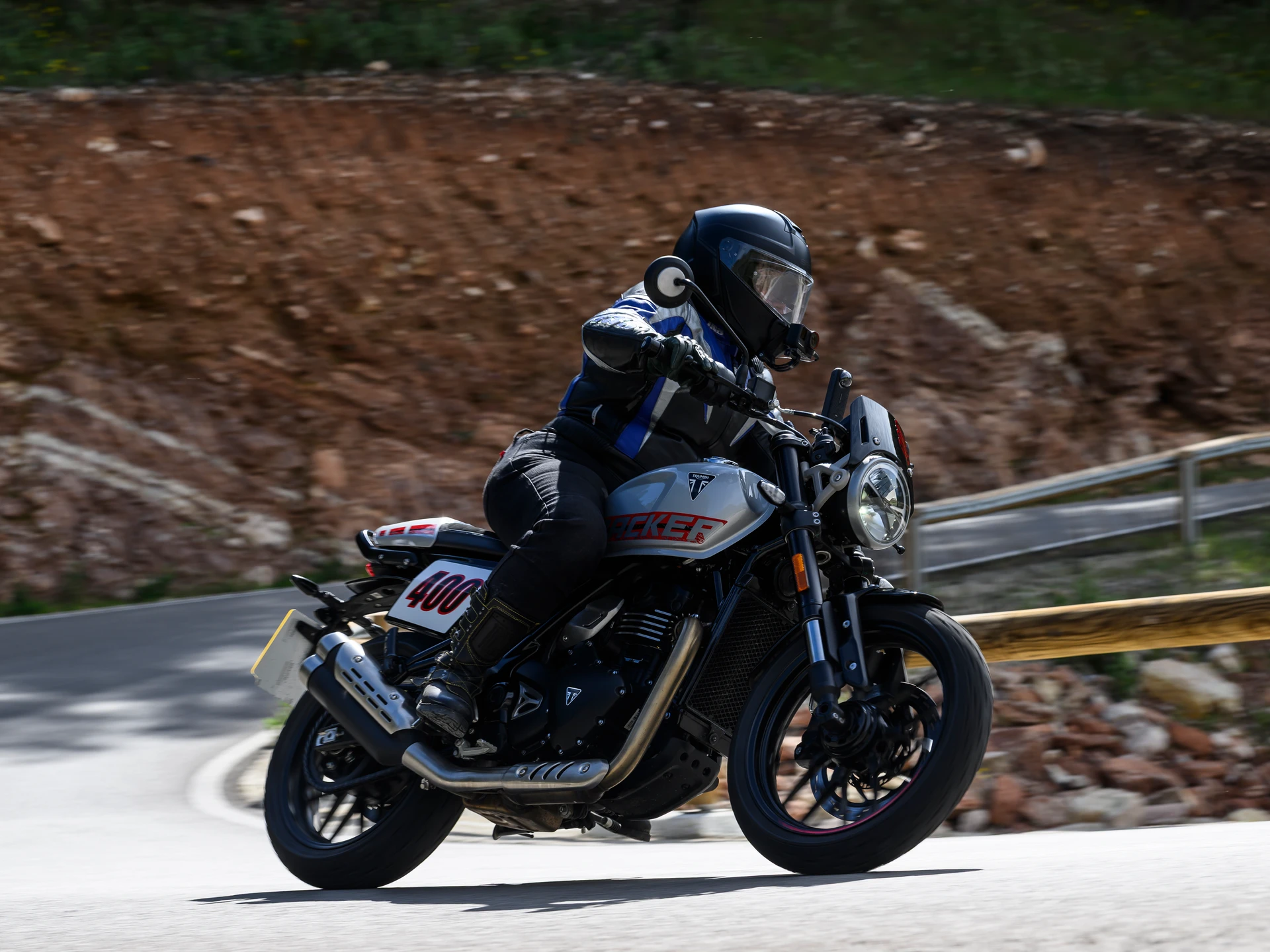
I know this first-hand. When we went looking for a bike my son could ride as well, we only tried and compared bikes in this class, and in the end a 2025 KTM 390 Duke went into the garage. I told the whole story in my Triumph Tracker 400 test ride, as that was the other contender.
What big bikes cost
A big naked or a top-end adventure bike easily costs more than €15,000 today. A 400cc motorcycle costs less than half that: Italian price lists in November 2026 run from about €4,500 to €7,500, depending on make and type. For a youngster, or for someone coming back to bikes after years away, that gap decides everything.
There is an industrial side to it as well. A single or a small twin costs less to build and to homologate, and many of these bikes are made in Asia with large local partners: Triumph and KTM with Bajaj, Harley-Davidson with Hero, BMW with TVS. That is how the old names can hit prices that looked impossible ten years ago.
The Chinese brands
CFMoto, Voge, QJ Motor and Zontes reached 21% of motorcycles sold in Italy in 2025, one in five. Many of them are exactly this kind of affordable mid-size bike: the CFMoto 450MT was Italy's seventh best-selling motorcycle in 2025, with 2,371 registrations. European and Japanese makers could not leave them the whole field.
Who buys them
Not just the young. 400s appeal to people who ride in town and commute, to those who want to spend less on tyres and insurance, and to many of us who, with the years, are less keen on pushing 230 kg around the garage. Italy's 2025 top 30 includes the Honda GB350S, the Royal Enfield Guerrilla 450 and the Himalayan 450: proof that classic style sells, even in a smaller size.
A word of caution on the figures. Motorcycle sales in Italy fell by 19.2% in 2025, and there is no public data for the 300-500cc class. So I am not saying 400s sell more than before. I am saying manufacturers are betting on them, and the price lists show it.
400cc motorcycles on sale today
Rather than a model-by-model price list, which would be out of date in three months, I have lined up the manufacturers with their price bands. These are indicative Italian prices for November 2026, before on-the-road costs: for the exact figure, ask your dealer.
- Triumph offers its 400s between about €5,700 and €7,300: Speed 400, Scrambler 400 X and XC, Thruxton 400 and Tracker 400, all with the same 398cc single. The range starts with the Speed 400 and tops out with the wire-wheeled Scrambler XC.
- Royal Enfield remains one of the cheapest classic brands: the 350s (Hunter, Classic, Bullet, Meteor and Goan Classic) sit between €4,400 and €5,300, the Guerrilla 450 and Himalayan 450 at around €6,000.
- Moto Morini has brought back the 3½ name. The new 3½ Sport still has a 349cc V-twin, now at 60 degrees and liquid-cooled, with 33 hp, and costs about €4,200: the cheapest classic on the list. Pre-orders opened at the end of September and first deliveries were due from mid-October, so it is only now starting to appear in showrooms.
- Honda covers the widest band, from about €4,700 to €7,300: from the Sixties-flavoured GB350S to the 500 twins, that is the CL500, Rebel 500, CB500 Hornet, CBR500R and NX500.
- KTM and Husqvarna share the 399cc single and sit between €6,200 and €6,800: 390 Duke, RC 390, 390 Adventure, Svartpilen and Vitpilen 401.
- Aprilia offers the 457 twin of the RS and Tuono at around €6,700-6,800.
- Kawasaki, with the Z500, Ninja 500 and Eliminator 500, sits between €6,300 and €6,900.
- The Chinese brands, led by CFMoto, Zontes and Voge, compete on price: roughly €4,800 to €6,500 for nakeds, adventure bikes and the scrambler-style CFMoto 450CL-C.
- Benelli, Brixton and Fantic sit around €6,000-7,000 with the Leoncino 500, TRK 502, Crossfire 500 and Caballero 500.
Triumph is the maker that believes in it most, with five models on the same base and a sixth on the way. In 2024 it sold 134,635 bikes worldwide, 64% more than the year before, and passed 100,000 for the first time: the push came from the Speed 400 and the Scrambler 400 X. I will give the 400 family an article of its own.
What is coming after EICMA 2026
This is the interesting part, because even manufacturers that wanted nothing to do with this class until recently have moved.
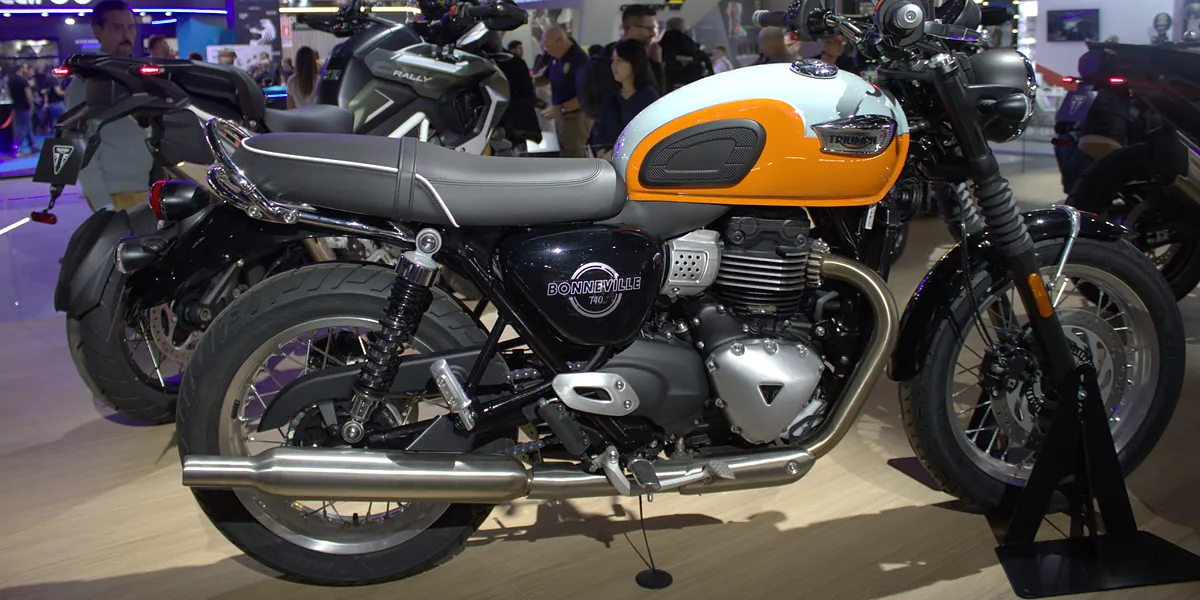
- Triumph Bonneville T40 and T40 Black: the first single-cylinder Bonneville, 398cc, 32 hp and 191 kg. It arrives in spring, with the official price due in early 2027. I sat on it at EICMA and wrote about it in this article; the figures are in the Bonneville T40 page.
- BMW F 450 R and F 450 RR: a 420cc parallel twin with 48 hp, one naked and one faired sports bike, styled after the S 1000 R and RR. BMW brings big-bike quality to machines announced from about €6,700 in Italy.
- Moto Guzzi The Trip: a 500cc roadster, but with a parallel twin rather than the transverse V. Just under 48 hp and 180 kg, expected in dealers in early 2027. No price yet.
- Honda CBR500R Four: mind the name, because this is not the twin-cylinder CBR500R you can buy at a dealer today. It is a new bike, with a 502cc four-cylinder, 72 hp and the E-Clutch as standard, plus a 35 kW A2 version. A half-litre four, like the old days. Price to be confirmed.
- Harley-Davidson Sprint 440: a 440cc single with 27 hp, Italian price and launch date still to be announced.
- Kawasaki KLE500 SE: a small adventure bike with an automatic clutch, due in December.
- Phelon & Moore Capetown 5: a 449.5cc twin with 46.5 hp, in 5X and Rally versions.
Further ahead, the eyes are on 2028. KTM showed the new 450 RC with a twin, which goes into production at the end of 2027, and Yamaha brought the Ténéré 4 prototype, a single designed for the A2, with no figures or dates yet.
Single, twin or four
The same capacity hides very different bikes, and it is worth knowing before you walk into a dealer. A single, like the ones in the Triumphs, KTMs or Royal Enfields, is light, narrow and pulls well low down: ideal in town, less happy when held at high revs for long.
A parallel twin, as on the Aprilia 457s, the Honda 500s or the new BMWs, vibrates less and runs more smoothly, at the cost of a few extra kilos. The four in the CBR500R Four is a case apart: you have to rev it, and it promises to bring back the four-cylinder sound that anyone who owned a CB400 Four remembers well.
The limits of a 400cc motorcycle
It is not all roses, and I say that as the owner of a Bonneville 865. A 40 hp single will do the motorway, but at 130 km/h (80 mph) the engine is working hard and you feel the vibration. On the Tracker I had already noticed it after half an hour when I picked up the pace. Two-up with luggage, the margin shrinks quickly.
Then there is the used market. Many of these bikes are new and turn up as pre-registered, nearly-new stock, so it is too early to know what they will be worth in a few years. With the newer brands it is also worth checking how close the nearest workshop is and how long parts take to arrive.
That said, for town, weekend rides and a first bike, a 400 does almost everything you need, with less weight and less expense.
400cc motorcycles: the right bike, just like the Seventies
400cc motorcycles are not a passing fad. They are the answer to licences, prices and habits that have changed, and they look a lot like what 350s were for us forty years ago: the bike you start on, and often the one you have more fun with than a big one. If you own one, or are thinking of getting one, write to Boomer Classic and tell me how it went.