
Why Do We Buy a Motorcycle That Looks 60 Years Old?
Why are we drawn to motorcycles that look as if they came from the 1960s? Explore the appeal of modern classics, nostalgia, style and contemporary technology.
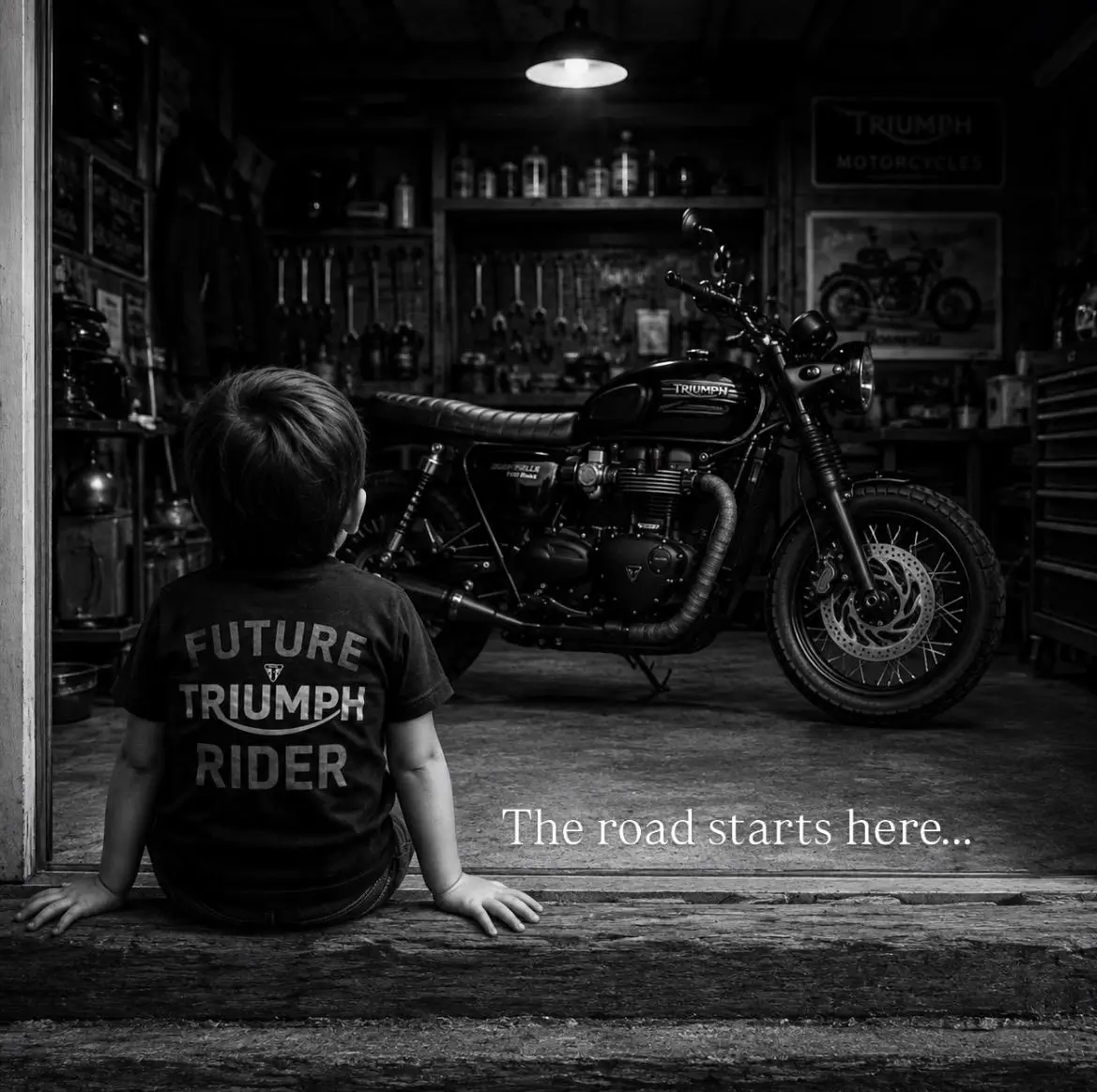
Why, of all the new motorbikes we can buy today, do we end up choosing the very one that looks as if it’s come straight out of a 1965 garage?
I’ve asked myself this more than once. Especially when I look at my motorbike parked there and think that, at first glance, it could easily have been photographed fifty years ago. Then I turn the key, the engine starts first time, and I remember that beneath that fuel tank, that round headlight and that retro-style seat lies a modern motorbike.
And that’s probably exactly the point.
A modern classic motorbike is, in many cases, a sort of modern gem in disguise. It has the look from the past that we love, but allows us to ride it today, with a level of technology, reliability and practicality that a genuine vintage motorbike can hardly offer.
The universal appeal of vintage motorbikes
The curious thing is that this type of motorbike appeals to people who are very different from one another.
A twenty-five-year-old might fall in love with a 1960s-style motorbike without ever having lived through those years. A sixty-year-old motorcyclist, on the other hand, might look at it and immediately recognise something that belongs to their own memories.
Two seemingly opposing motivations that nevertheless lead to the same result.
For the younger generation: standing out without going over the top
For many young people, a classic motorbike represents a form of non-conformity. In a world full of displays, electronics, riding modes and increasingly sophisticated devices, getting on a motorbike with a round headlight and two analogue gauges can feel almost like going against the grain.
It doesn’t mean rejecting technology. It simply means not wanting to see it all the time.
The technology is there, but it remains in the background. What you see is the metal, the fuel tank, the engine, the spokes – or, in any case, those details that make the motorbike seem like more than just a means of transport.
For us boomers: that feeling of having seen it all before
For those, like me, who are a bit older, it’s a different story.
A vintage motorbike or a Modern Classic can bring back a memory – an image, a sound, a road. Perhaps a friend’s motorbike, one spotted outside a café, or simply the photographs of the motorbikes that made us dream when we were youngsters.
And then there’s something we often forget: the tactile pleasure.
Pressing a button, gripping the handlebars, watching the rev counter move, feeling the engine beneath us. They’re small things, but they’re part of the experience.
Ultimately, young and old alike are looking for the same thing: authenticity.
What exactly is a Modern Classic?
It’s worth clarifying this a little.
A Modern Classic isn’t simply a new motorbike with an old-school look. The concept is more interesting: it means taking certain aesthetic and conceptual elements from the past and combining them with a modern platform.
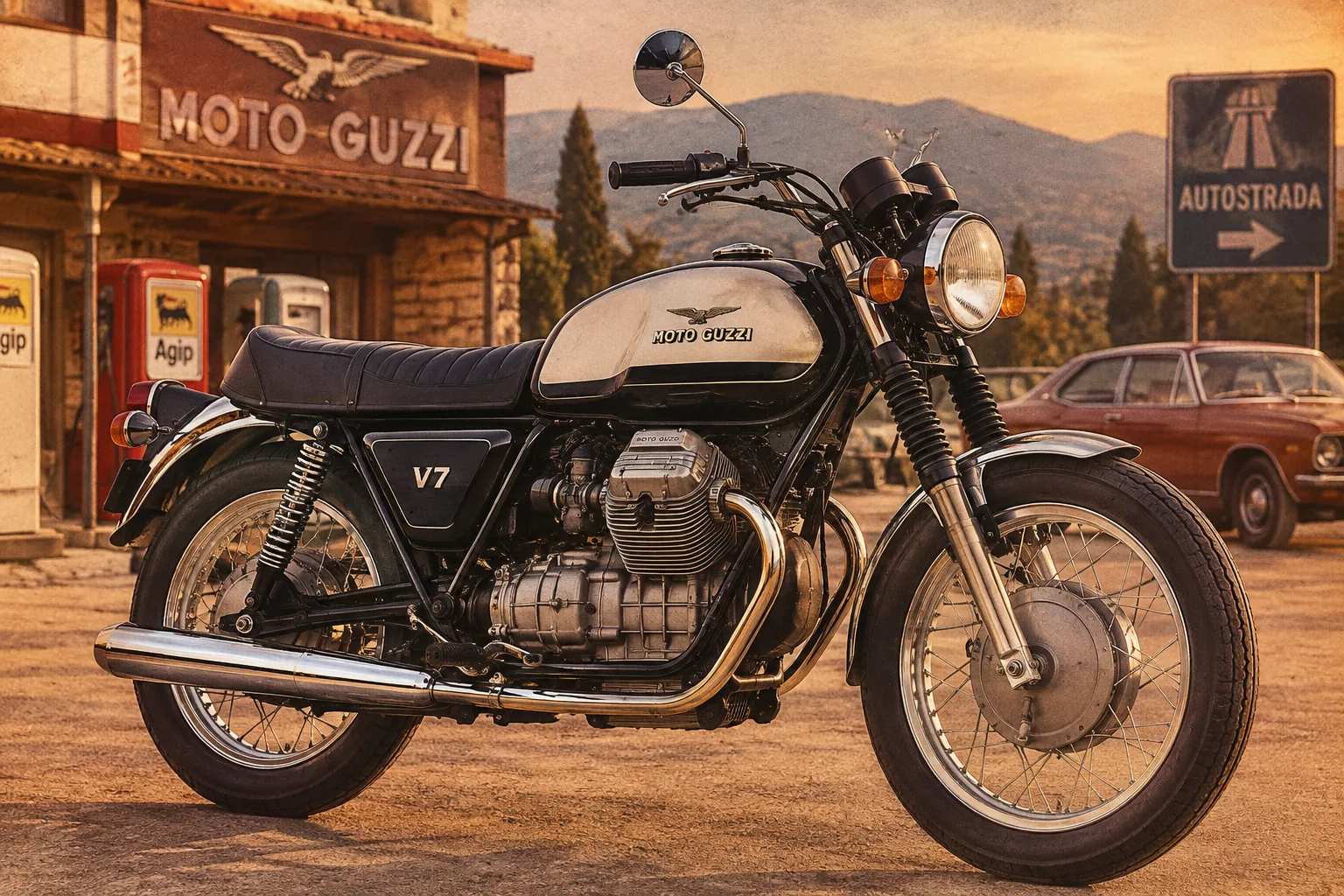
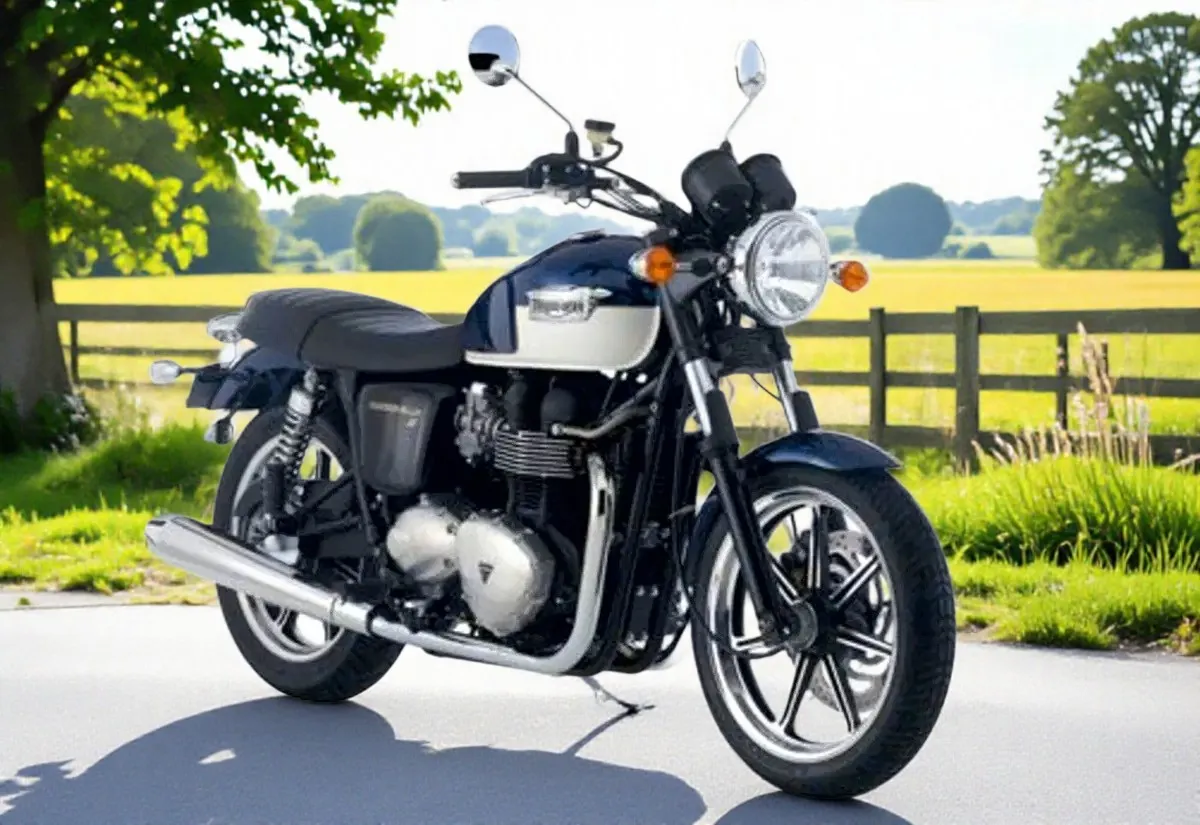
A Triumph Bonneville, a Royal Enfield Interceptor 650 or a Moto Guzzi V7 are very different examples of the same approach. The Honda CB650R, whilst adhering to a more modern philosophy, sits instead in that grey area where classic design and contemporary technology interact.
The result is a motorbike that may evoke the past, but does not claim to perform like a motorbike from sixty years ago.
And that is a fundamental difference.
With a genuine vintage motorbike, you have to factor in its age, spare parts, specific maintenance, outdated electrical systems and greater care whilst riding. A Modern Classic, on the other hand, is designed to be used every day.
And this is precisely its strength: the charm of the past without necessarily having to deal with the problems of the past.
Buying guide: how to choose a classic motorbike without regretting it
Let’s get down to the practicalities. Because falling in love with a motorbike is easy. Buying the right one is another matter entirely.
When buying a classic motorbike, especially if it’s second-hand, I’d try to set my enthusiasm aside for a few minutes and look at the bike as if it belonged to someone else.
First of all, I’d set a realistic budget, leaving something aside for post-purchase expenses. A motorbike that seems like a bargain can turn out to be less so if it immediately needs new tyres, brakes, a battery and a service.
Before signing on the dotted line, I’d check at least the following:
- mileage: this must be consistent with the motorbike’s overall condition and with the documentation;
- servicing: it is best to have invoices, service records and documented repairs;
- rust: pay particular attention to the frame, exhausts, bolts and exposed parts;
- tyres: don’t just look at the tread, but also at the age of the tyres;
- brakes: check the discs, pads and how the lever feels;
- chain and drive train: wear and maintenance reveal a lot about how the motorbike has been looked after;
- leaks: take a good look at the engine, forks and areas where fluids are present;
- cold start: if possible, ask to see the motorbike before it has been warmed up.
New or second-hand? A new bike offers a warranty and greater peace of mind, whilst a good second-hand bike can allow you to buy a bike with character whilst spending less. But it’s precisely with second-hand bikes that you need to be more careful.
And let’s not forget insurance and road tax. In Italy, any discounts depend on the bike’s specifications, age, region and the terms of the policy: so before buying, it’s worth doing some proper calculations and not relying on hearsay.
My most important piece of advice, however, is this: don’t fall in love with the first motorbike you see.
If it’s the right one, it’ll still be there after you’ve looked at two or three others.
Looking after a Modern Classic: a few rules, but done properly
A classic motorbike doesn’t necessarily require obsessive attention. Above all, it requires regular maintenance.
Oil and the filter should be changed at the intervals specified by the manufacturer. The chain, where fitted, must be cleaned, lubricated and checked. Brakes, tyres, fluids and the battery deserve regular checks, especially if the motorbike is used infrequently.
Here lies an important difference between older carburettor-equipped motorbikes and modern fuel-injected models.
A carburettor requires more attention after long periods of inactivity and can be more adversely affected by old, dirty fuel and fuel supply issues. Electronic fuel injection is generally easier to manage in day-to-day use, but this does not mean the motorbike can be left neglected for months on end.
In fact, one of the rules I consider most important in looking after modern classic motorbikes is precisely this: use it.
A motorbike designed to be ridden isn’t better off sitting idle in the garage. A battery will run flat, fluids will deteriorate, tyres may become misshapen, and certain problems may arise precisely after long periods of inactivity.
Whenever possible, a short ride every now and then is better than months of inactivity.
The garage matters more than we realise
A dry and, if possible, well-ventilated environment is a classic motorbike’s best friend.
Damp is a silent enemy: it can promote oxidation and corrosion, especially on metal parts. A good, breathable cover can help, but I’d avoid covering the motorbike with a heavy tarpaulin whilst it’s still damp or wet.
And then there’s the mechanic.
I wouldn’t assume that every workshop knows how to work on any classic motorbike in the same way. The basic mechanics remain the same, of course, but knowing a specific model, knowing where to start and, above all, understanding the philosophy behind its construction can make a world of difference.
The real reason why we keep buying them
Ultimately, I think the answer to the initial question is quite simple.
We buy a motorbike that looks sixty years old because we aren’t necessarily buying an old motorbike.
We’re buying a different way of experiencing motorcycling.
A Modern Classic allows us to enjoy technology and reliability without sacrificing that irrational element that made us fall in love with motorbikes in the first place. For those starting from scratch, it can also be one of the most interesting ways to discover classic motorbikes for beginners. For those who’ve been riding for forty years, on the other hand, it can be a way to rediscover a feeling they thought was lost.
The allure of vintage motorbikes lies not just in their appearance. It lies in the fact that a motorbike still manages to make us pause for a moment, turn our heads as we park it and, perhaps, before stepping into a café, look back one last time.
And perhaps that is exactly what we’re looking for.
Not just a machine to get from A to B.
A travelling companion.
Your next motorbike might already be in someone’s garage. Perhaps it’s been there for a few years, simply waiting for the right person.
And perhaps that person is you.
Here at Boomer Classic, we’ll continue to talk about motorbikes, buying them, maintenance, history and everything else to do with these old passions of ours. Because, at the end of the day, when it comes to motorbikes, there’s always something new to learn. And almost always a good story to tell.