
The Grand Tuscia and Lake Bolsena Loop by Motorcycle
There are motorcycle rides that do not need a spectacular destination to be fun. All it takes is a mix of minor roads, well-linked bends, a few climbs, a lake and a handful of villages to stop in with your helmet still warm. This grand Tuscia loop starts from Formello and crosses one of the areas of Lazio that I personally find best suited to a full day in the saddle.
You set off from the hills north of Rome, heading for Campagnano and Nepi, gradually leaving the capital's traffic behind. The road changes rhythm almost immediately: countryside, woods, ups and downs and those stretches where it comes naturally to hold a higher gear and let the bike flow.
From Civita Castellana you continue towards Viterbo, then enter the territory of the Monti Cimini. Here the route becomes even more interesting: Ronciglione, Lake Vico and Caprarola are the riding heart of the loop, with roads set in the greenery and constant changes of direction.
Past Caprarola, the landscape changes again. The altitude drops, the woods give way to cultivated hills and the road leads towards Valentano and Lake Bolsena. This is the most scenic part of the tour: the lake gradually appears in front of the bike and accompanies the route as far as Montefiascone, before the final run to Viterbo and the ride back to Formello.
It is a ride to take without hurry. There is no need to chase a record on the stopwatch: the beauty is in alternating stretches where the bike can flow with moments when it is worth slowing down, parking and looking around.
Itinerary
- Formello (RM)
- Campagnano di Roma
- Nepi
- Civita Castellana
- Viterbo
- Ronciglione
- Lake Vico
- Caprarola
- Valentano
- Bolsena
- Montefiascone
- Viterbo
- Formello (RM)
The tour starts at Formello, where you only need to leave the built-up area behind to enter, quickly, a landscape completely different from the outskirts of Rome.
The first part is a true warm-up stretch. The road crosses the countryside of the Valle del Sorbo and climbs gradually towards Campagnano di Roma, alternating short straights, soft bends and constant changes of altitude.
It is not yet time for big lean angles, but that is exactly the beauty of it: you get to know the bike, let the engine work and begin to settle into the rhythm of the day.
Campagnano is the first chance for a short break. The old town is worth a detour if you are not in a hurry, but for those already eager to eat up the miles it is above all the point where the journey towards the Tuscia really begins.
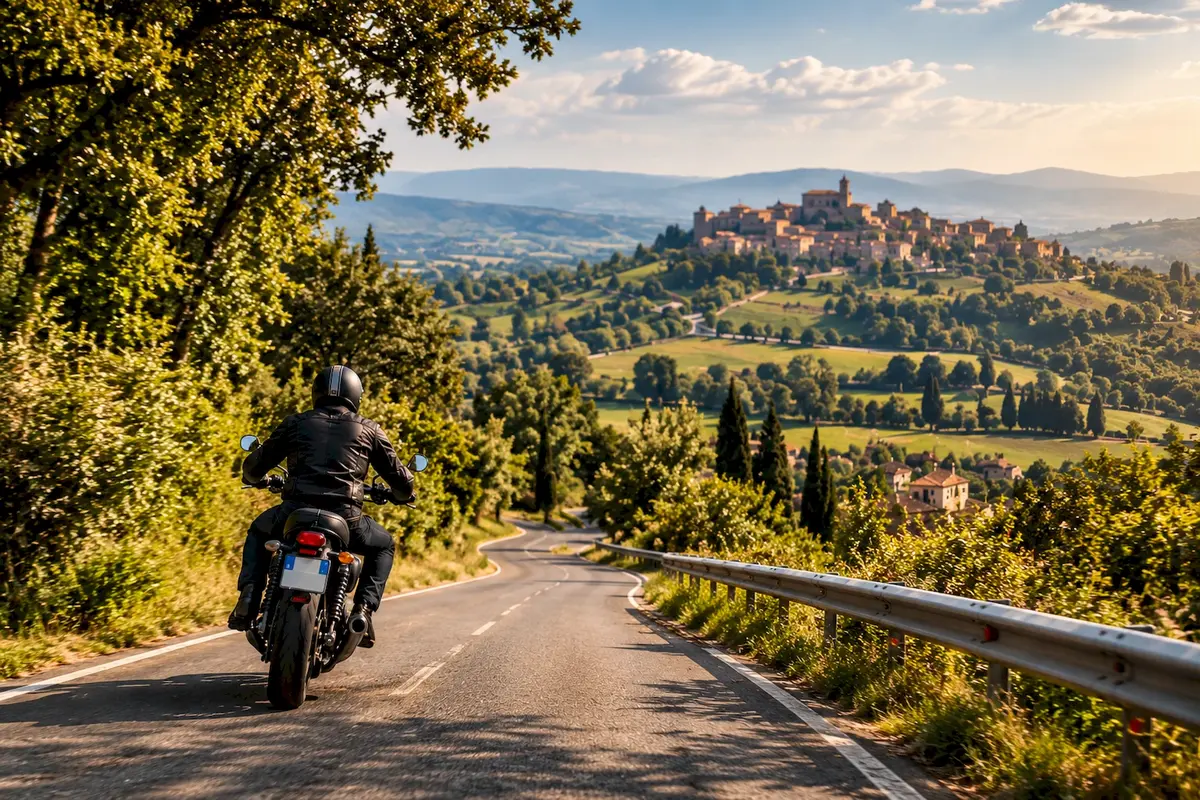
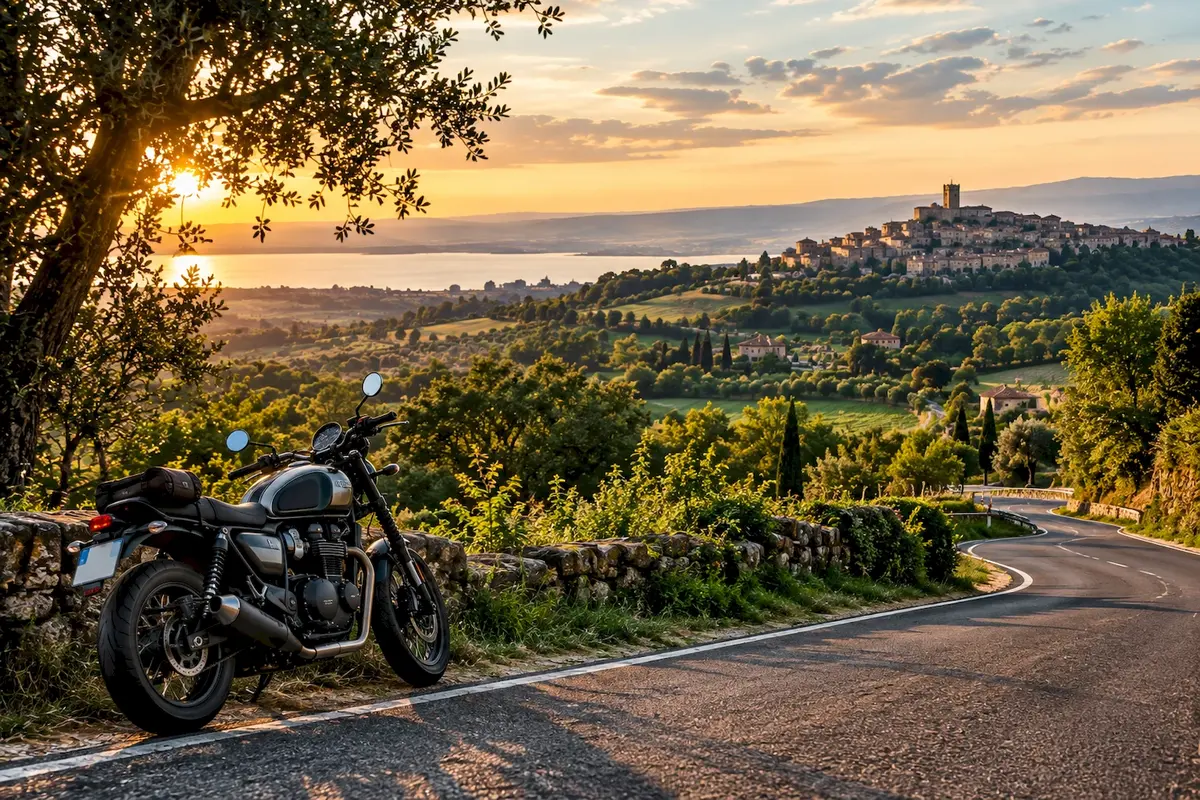
Leaving Campagnano, the route heads for Nepi, gradually entering wilder and less built-up territory.
Here the road becomes more interesting for the rider. The route alternates bends of different radius, short climbs and descents, and some sections where the bike can be left to flow without constantly working the brakes.
It is the kind of route I personally enjoy a great deal on Modern Classics: no crazy speeds, no motorway, just a sequence of bends to tackle cleanly and an engine working at relaxed revs.
As you approach Nepi, the landscape takes on the characteristic look of the Tuscia: tufa, dense vegetation, cultivated fields and deep cuts in the ground that bear witness to the particular volcanic formation of this area.
Nepi is a good opportunity to stop for a few minutes in the old town, have a coffee and set off again with the bike ready for the next stretch.
From Nepi the route continues towards Civita Castellana, entering one of the areas where Etruscan history and the landscape of the Tuscia meet most clearly.
The riding remains pleasant and fairly flowing. The route crosses a countryside of crops, woods and deep ravines that suddenly interrupt the continuity of the terrain.
Here it pays to keep a touring pace. Some sections can be narrow or have blind bends, and the scenery constantly invites you to roll off the throttle a little.
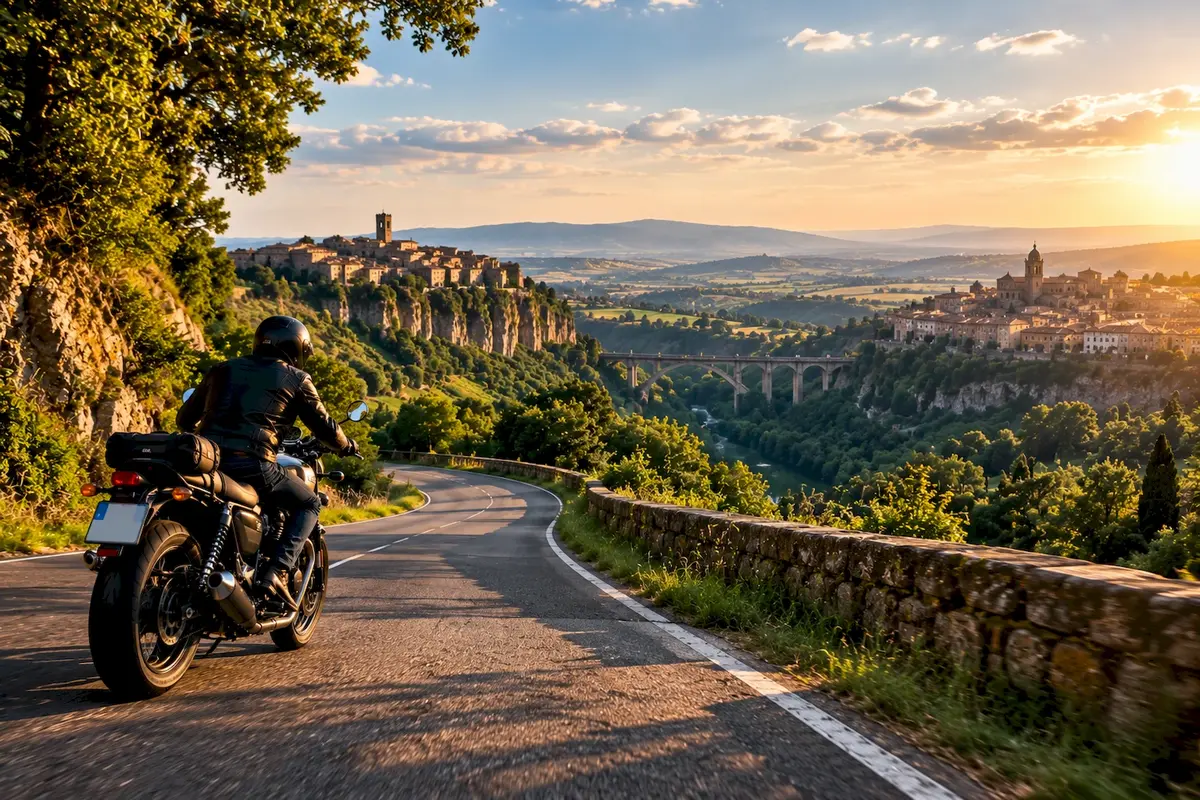
The arrival at Civita Castellana changes the atmosphere once again. The ancient Falerii Veteres is one of the most important historic centres in the area, and its position above the ravines makes it obvious how distinctive the territory we are crossing is.
For those who want a cultural break, the Rocca dei Borgia and the old town make an interesting detour. For everyone else, a quick stop and a few photographs of the bike are enough before setting off again towards Viterbo.
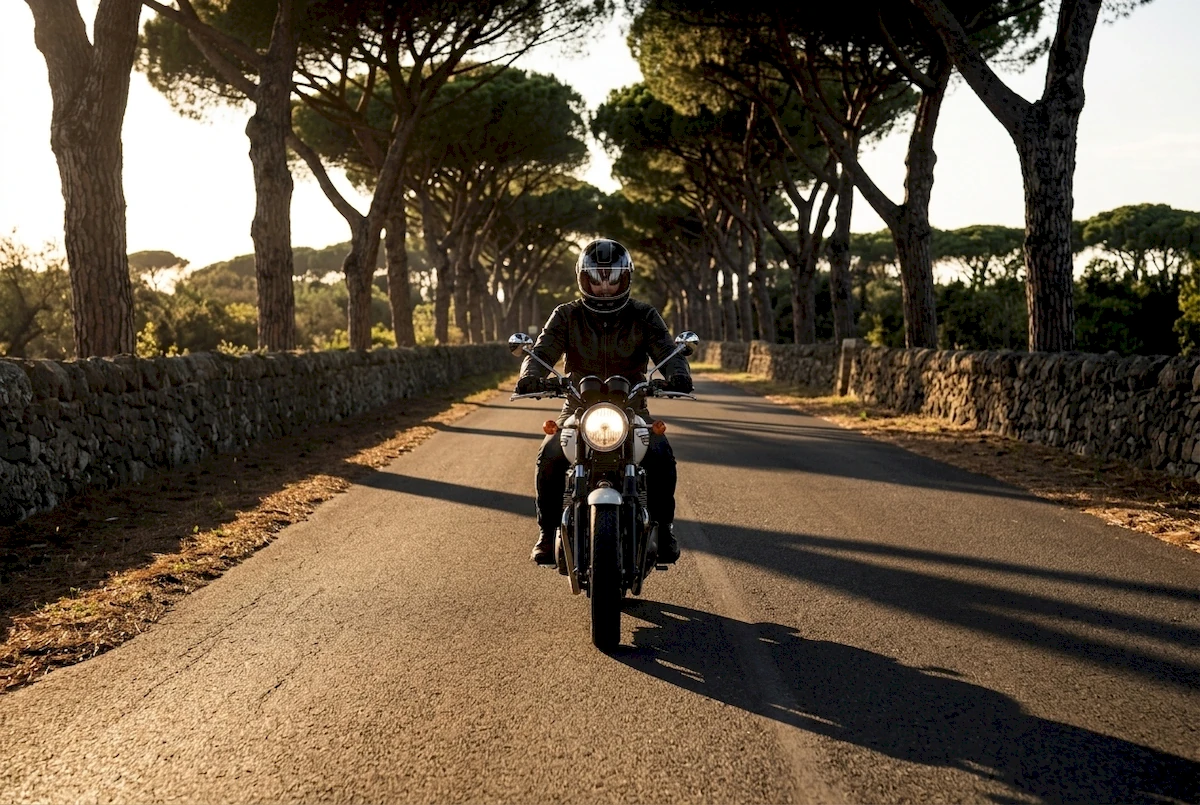
With Civita Castellana behind us, the route takes a more decidedly northerly direction towards Viterbo.
It is a link stretch, but not a boring one. The roads cross wide, open countryside and let you gradually raise the pace, alternating sweeping bends with straighter sections.
The landscape slowly begins to change. On the horizon the hills of the Monti Cimini appear, the most enjoyable part of the route.
Viterbo arrives almost as a natural pause before the second part of the tour. It is the right moment to refuel, have something to drink and check the bike.
From here on the character of the route changes: less transfer and more bends.
From Viterbo the route heads south-east, gradually leaving the city behind to enter the territory of the Monti Cimini.
The road begins to climb and the vegetation becomes more present. Chestnut trees and woods accompany the route and the tarmac starts to draw tighter bends.
This is one of the sections where it pays to forget the stopwatch. The Cimini roads work best when ridden at a smooth pace, without forcing the braking and letting the engine do most of the work.
Arriving towards Ronciglione, the landscape opens up again. The village is an excellent waypoint before tackling Lake Vico.
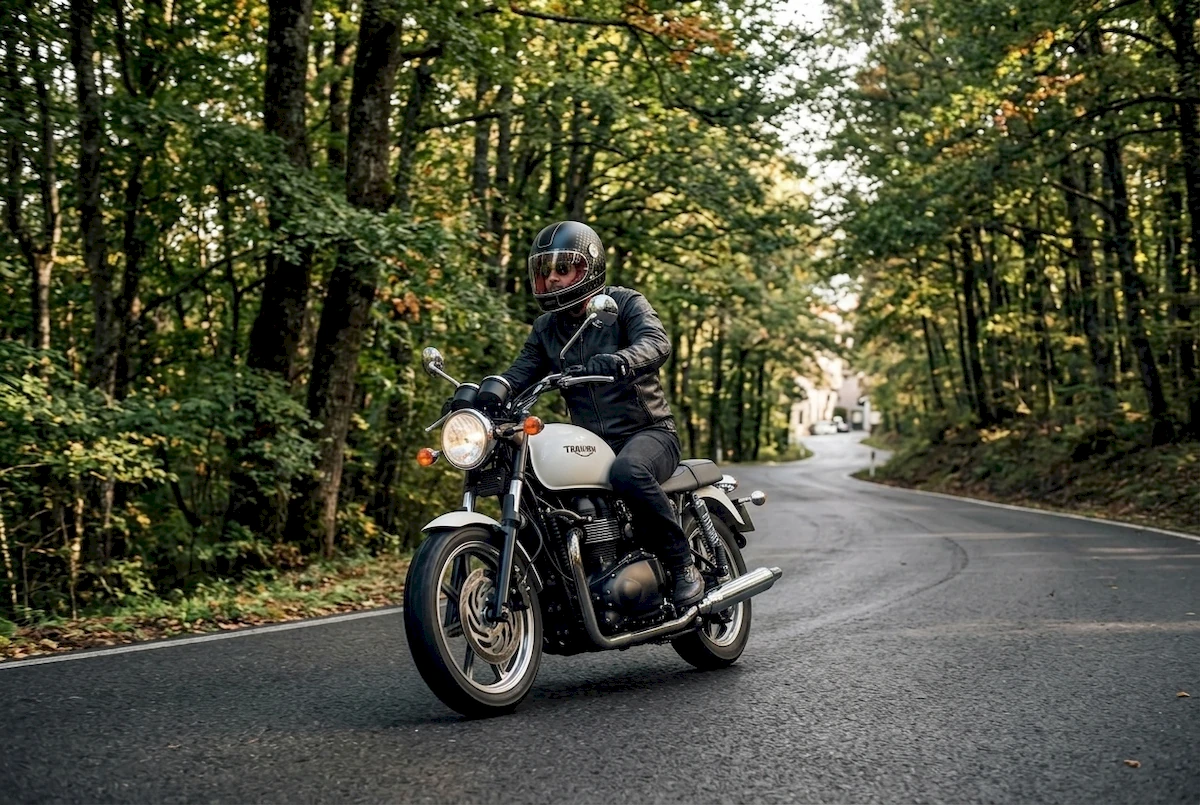
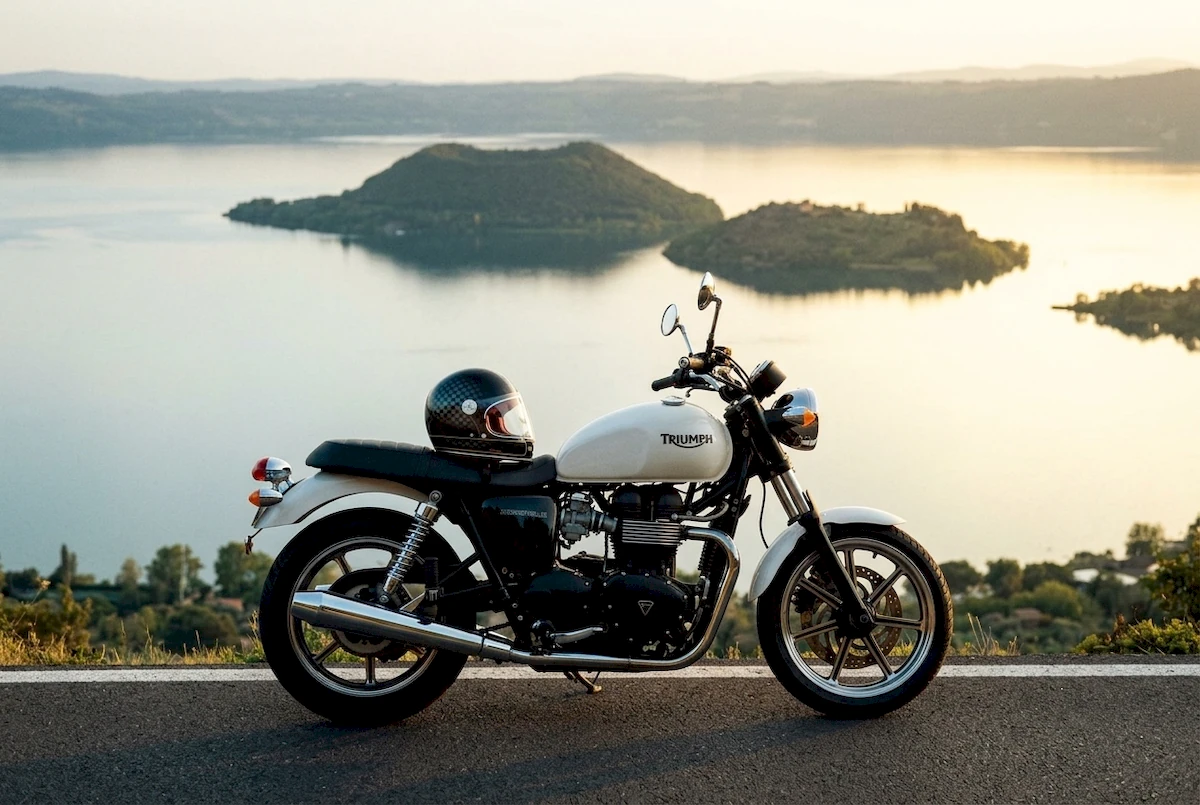
Past Ronciglione, one of the sections I personally consider among the most enjoyable of the whole loop begins.
The road enters the territory of Lake Vico, one of the great volcanic lakes of Lazio, surrounded by the woods of the Monti Cimini.
Here the bike seems to find its own rhythm naturally. Medium-fast bends, changes of direction and sections immersed in greenery alternate without leaving much room for monotony.
The presence of the lake completely changes the perception of the route. In some places the trees open up and let you glimpse the water; in others the road slips back into the woods.
It is the right moment for a scenic stop. Bike parked, helmet resting on the tank and a few minutes without thinking about the next stretch of road.
Then you set off again.
Leaving the lake, the route continues towards Caprarola, still keeping for a while the typical Cimini character.
The vegetation remains dense and the road keeps delivering bends and changes of gradient. It is not a stretch to tackle in search of maximum speed: the pleasure lies in continuity, in the way one bend leads naturally to the next.
The arrival at Caprarola, however, introduces a completely different element.
The town is dominated by the monumental Palazzo Farnese, one of the most important buildings in the area. Its characteristic pentagonal plan makes it instantly recognisable and it is worth a stop if time allows.
For the rider there is another reason to stop too: after the most engaging part of the Cimini, Caprarola is the ideal place for a pause before starting the descent towards Lake Bolsena.
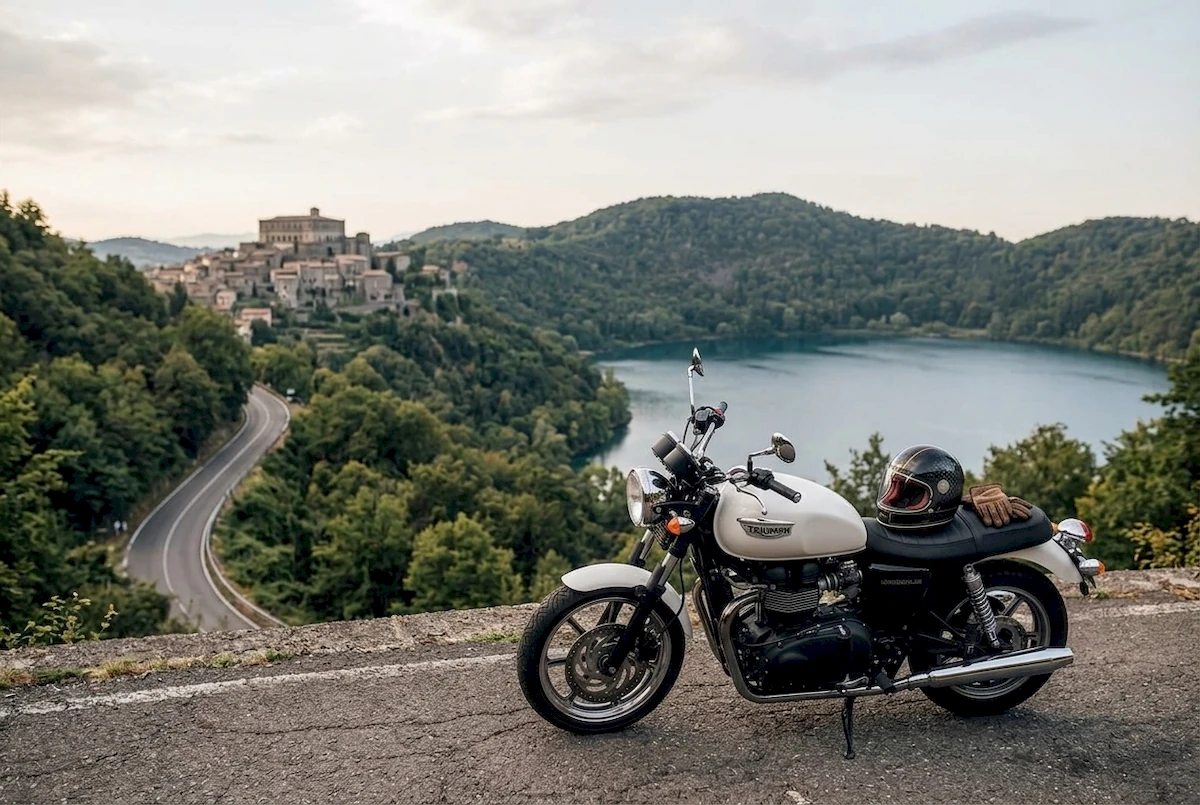
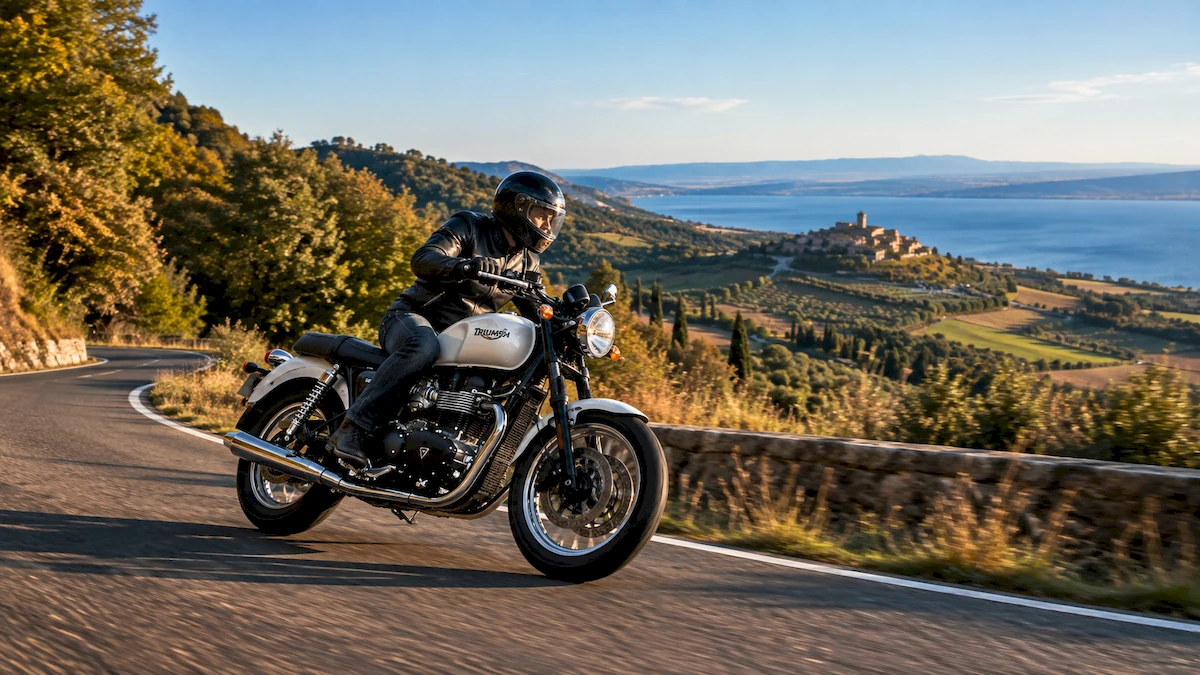
From Caprarola a new phase of the tour begins.
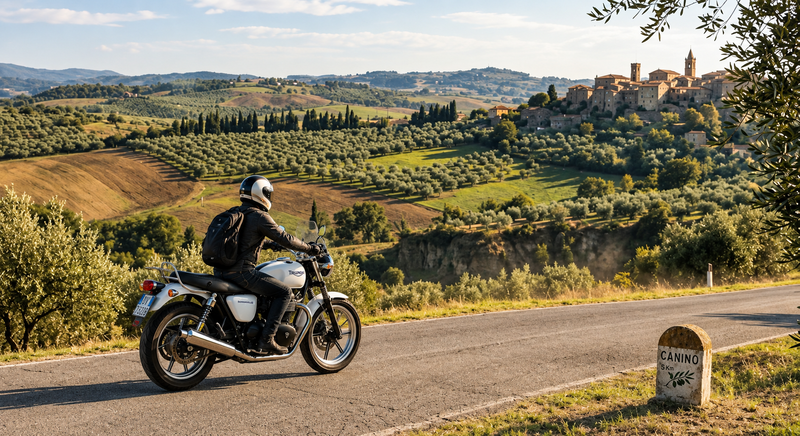
The road gradually leaves the Cimini woods and descends into a more open landscape of hills, fields, olive groves and small villages.
The riding changes too. The bends become wider and the route takes on a more scenic character. It is the classic stretch where you want to keep the engine happy but without overdoing it, watching the road and what opens up on either side at the same time.
As you approach Valentano, Lake Bolsena becomes more and more present in the panorama.
The village stands in a dominant position over the lake basin and is one of the interesting points of Upper Lazio precisely for its view over the surrounding territory.
A short stop here is worth it, especially on a clear day.
From Valentano the route heads for Bolsena, and at last one of the most beautiful moments of the tour arrives.
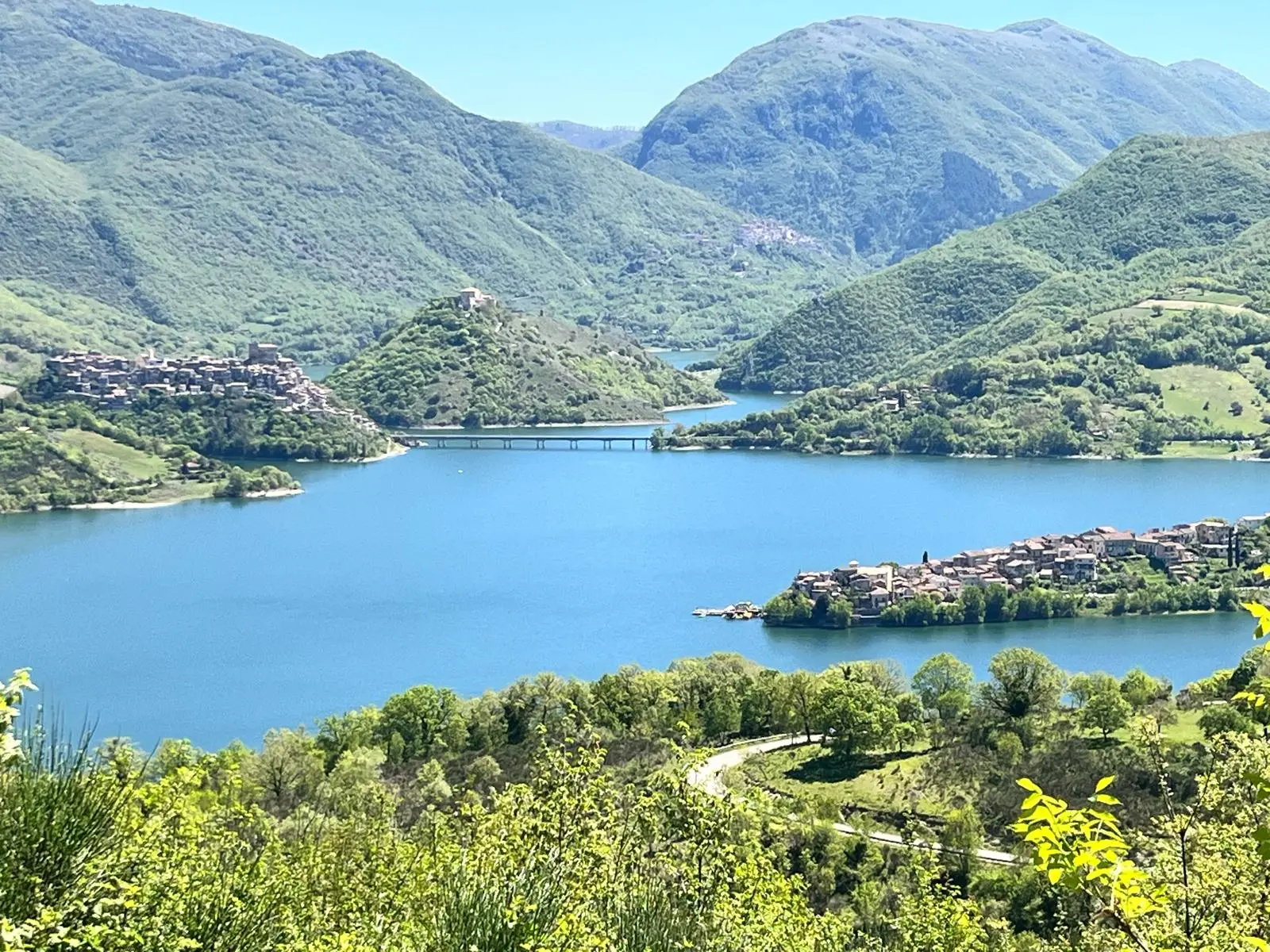
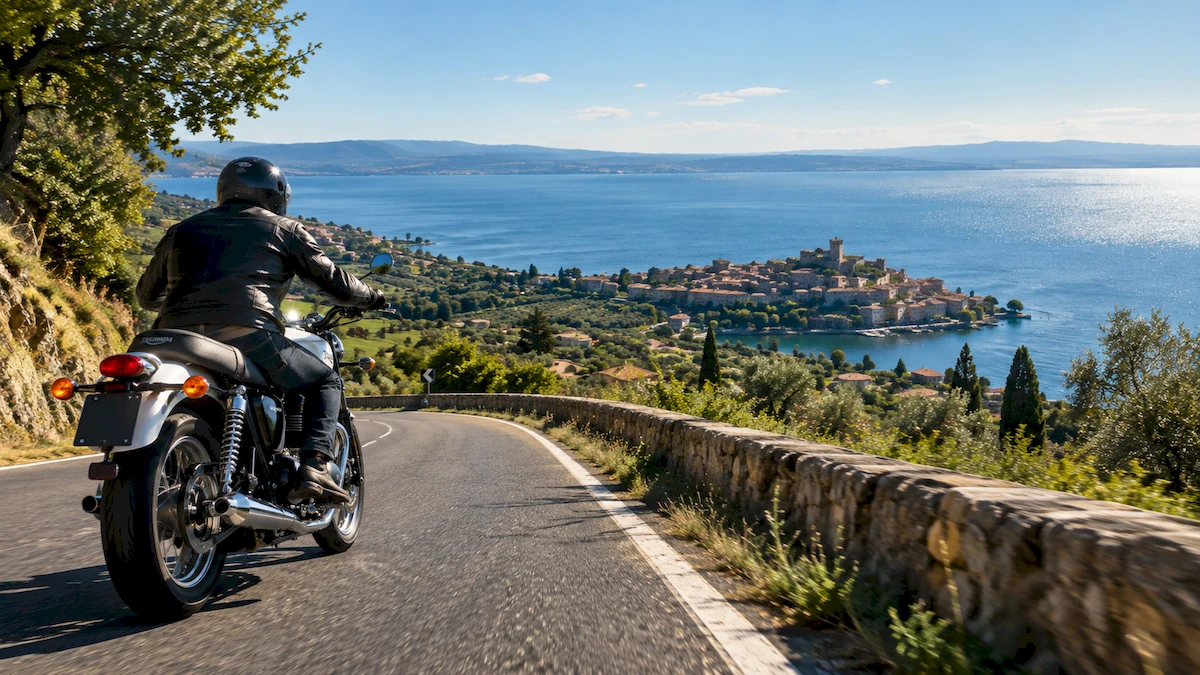
After many kilometres spent among hills and woods, the view opens up and Lake Bolsena begins to fill more and more of the space in front of the bike.
The route descends gradually towards the basin and lets you savour the change of scenery. The volcanic hills give way to the view of the water and, on clear days, the sight is remarkable.
Arriving at Bolsena is the ideal moment to slow down for good.
The lakefront invites you to park the bike and walk for a few minutes. The old town and the Basilica of Santa Cristina are worth a visit if the tour timing allows.
But above all, this is the right place to eat something.
Leaving Bolsena, the route climbs again towards Montefiascone.
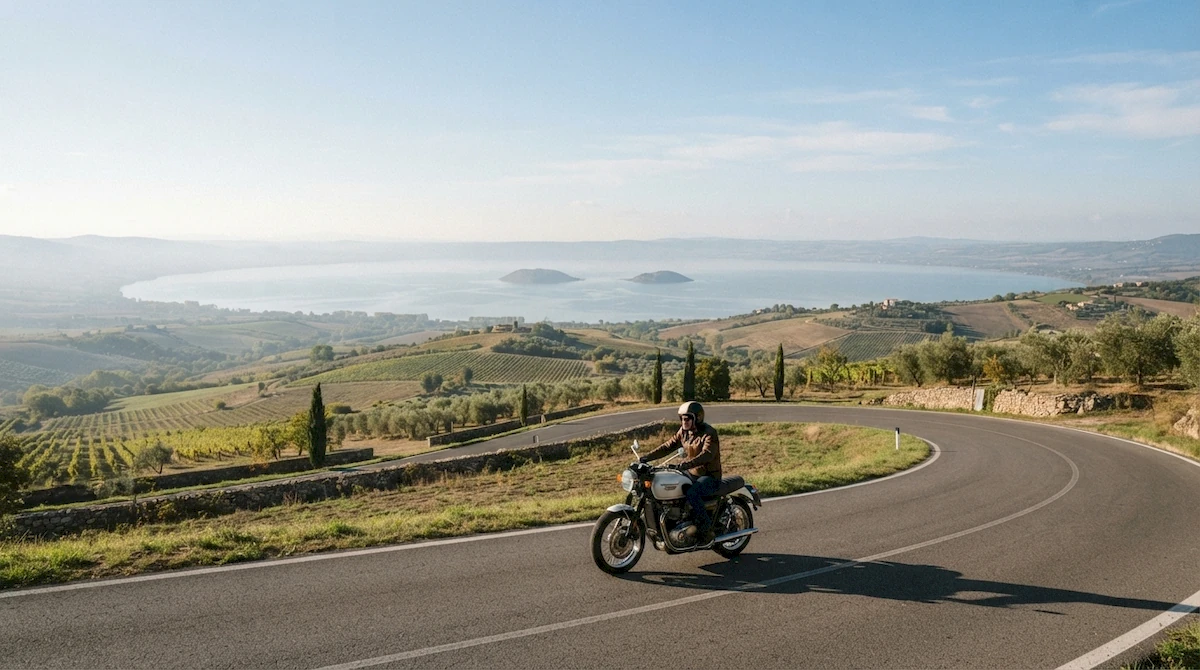
It is one of the most scenic passages of the loop: as the bike gains height, the lake stays behind and opens out beneath us.
The road alternates flowing sections with bends that call for more attention, especially where the terrain becomes more broken.
Montefiascone is also known for the production of Est! Est!! Est!!!, the wine that has tied the name of the town to the winemaking tradition of the Tuscia.
It is worth stopping here for at least a few minutes at one of the town's viewpoints. After a day in the saddle, seeing Lake Bolsena from above is one of those moments when you truly understand how much territory we have crossed.
From Montefiascone the route resumes the direction of Viterbo.
The character of the road gradually becomes more flowing again. After the bends of the Cimini and the ups and downs around the lake, this stretch lets you relax your riding a little and let the engine work without being constantly stretched.
Viterbo is the last real stop of the tour before the ride home.
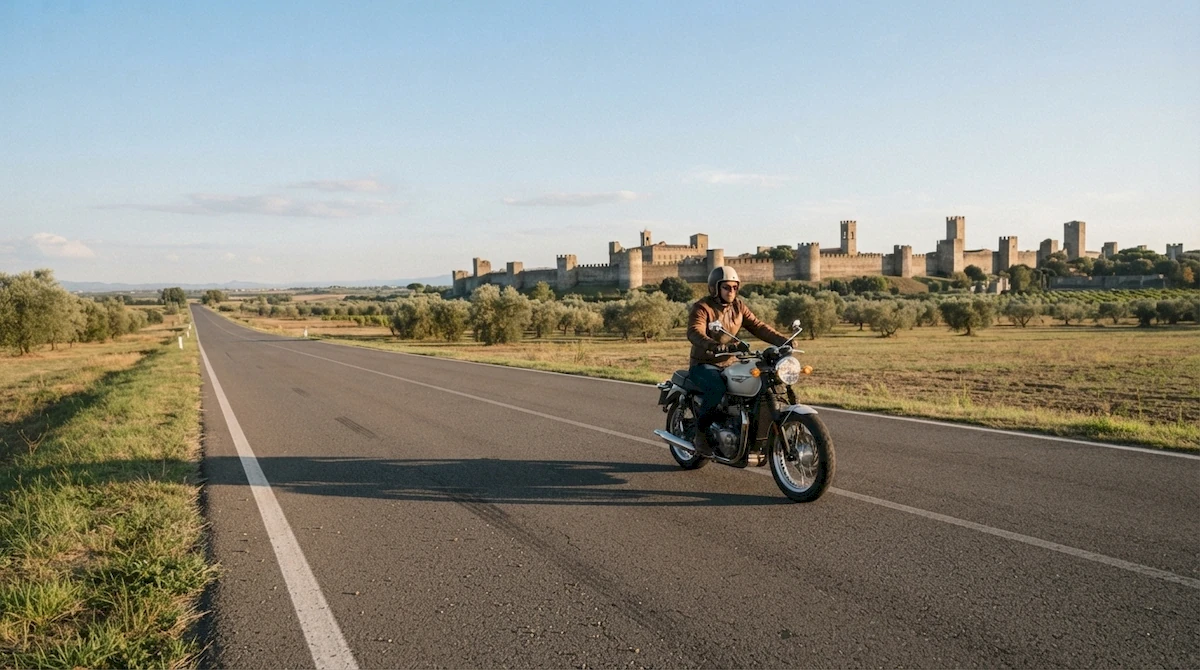
If time allows, a walk through the medieval San Pellegrino quarter is an excellent way to break up the last part of the day.
For those who would rather get home before dark, a short stop, a full tank and you set off again.
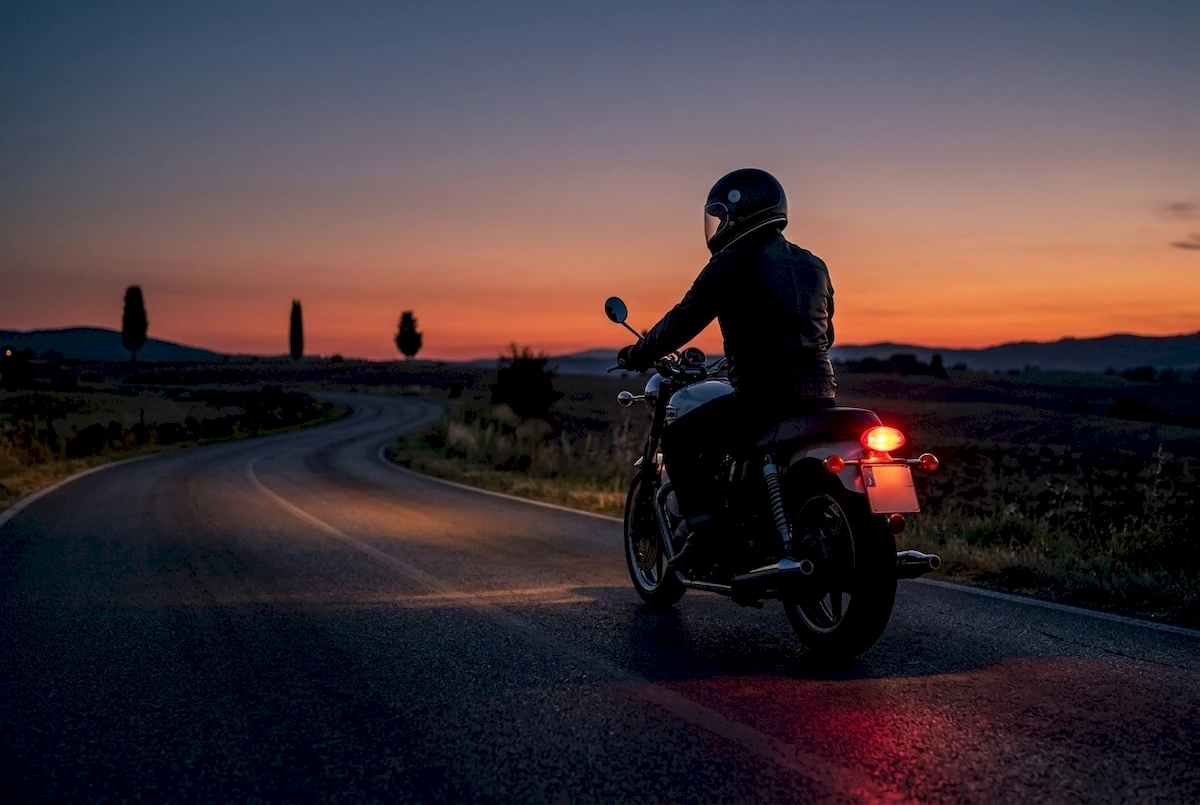
The last part of the tour takes you from Viterbo back to Formello, closing a loop that has crossed a good part of the Viterbo Tuscia.
After the mountains, the lake and the hills, the landscape gradually returns to the countryside south of Viterbo.
The riding becomes more relaxed. There is nothing left to conquer and no need to force the pace: it is time to enjoy the last kilometres and think back over the bends ridden during the day.
As you ride back into Formello, the bike still has a warm engine but the day begins to make itself felt in your arms.
And that is exactly the beauty of a ride like this.
You have not simply reached a place. You have crossed the Tuscia from end to end, from the woods of the Cimini to the waters of Lake Bolsena, from medieval villages to hill roads.
A great loop of about 300 kilometres (about 185 miles), to be taken calmly, without motorways and without chasing the stopwatch.
One of those days when you come home just the right amount of tired, park the bike, take off your gloves and are already thinking about when to do it again.