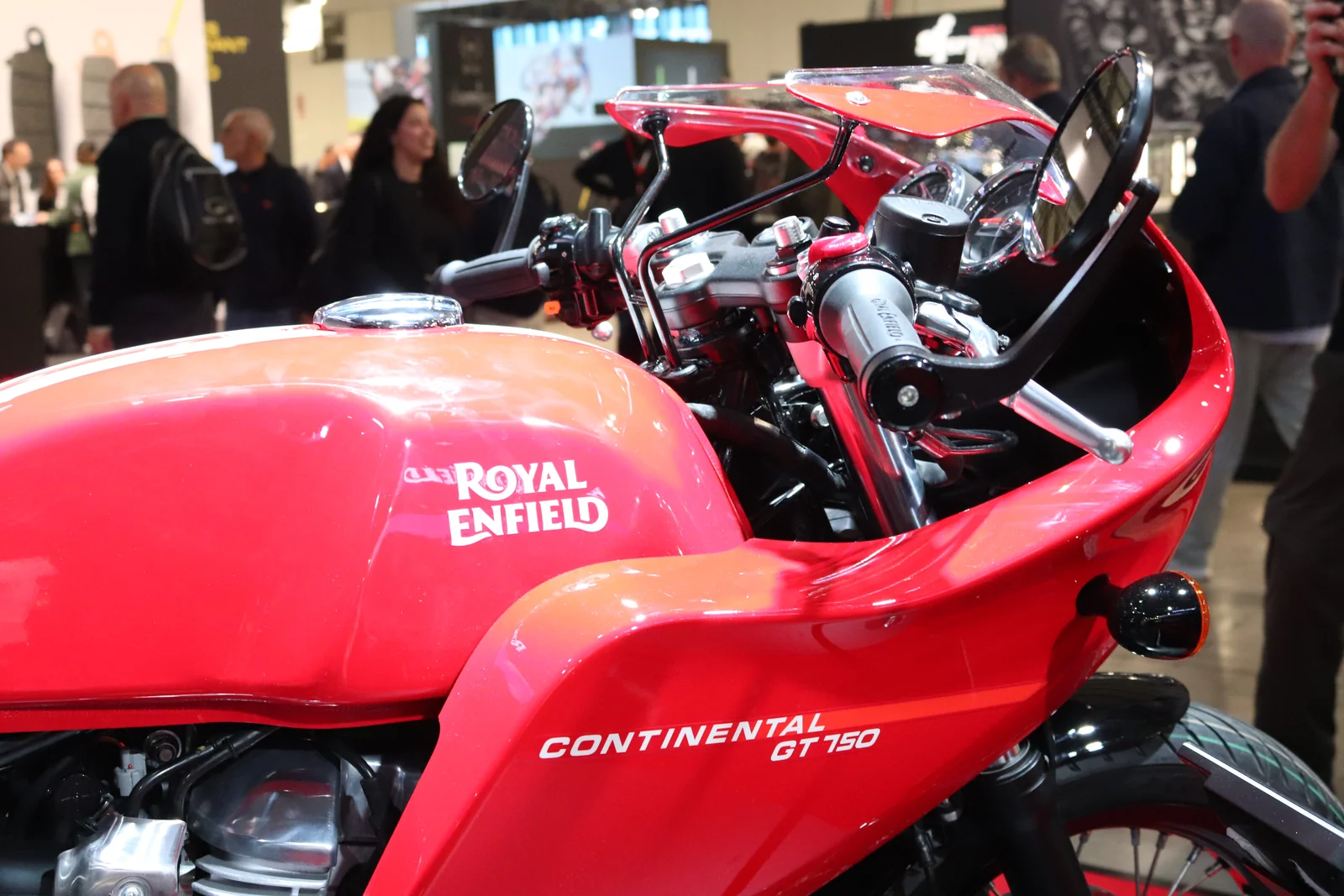
The Royal Enfield Continental GT 750 is the company's new café racer, unveiled at EICMA 2026 alongside the Himalayan 750. Both bikes debut the same engine, a 743cc air/oil-cooled parallel twin. Royal Enfield calls it the highest-performance production motorcycle it has ever built, but the numbers are still under wraps: power, weight and price haven't been announced. Deliveries are expected in 2027.
Straight back to the seventies
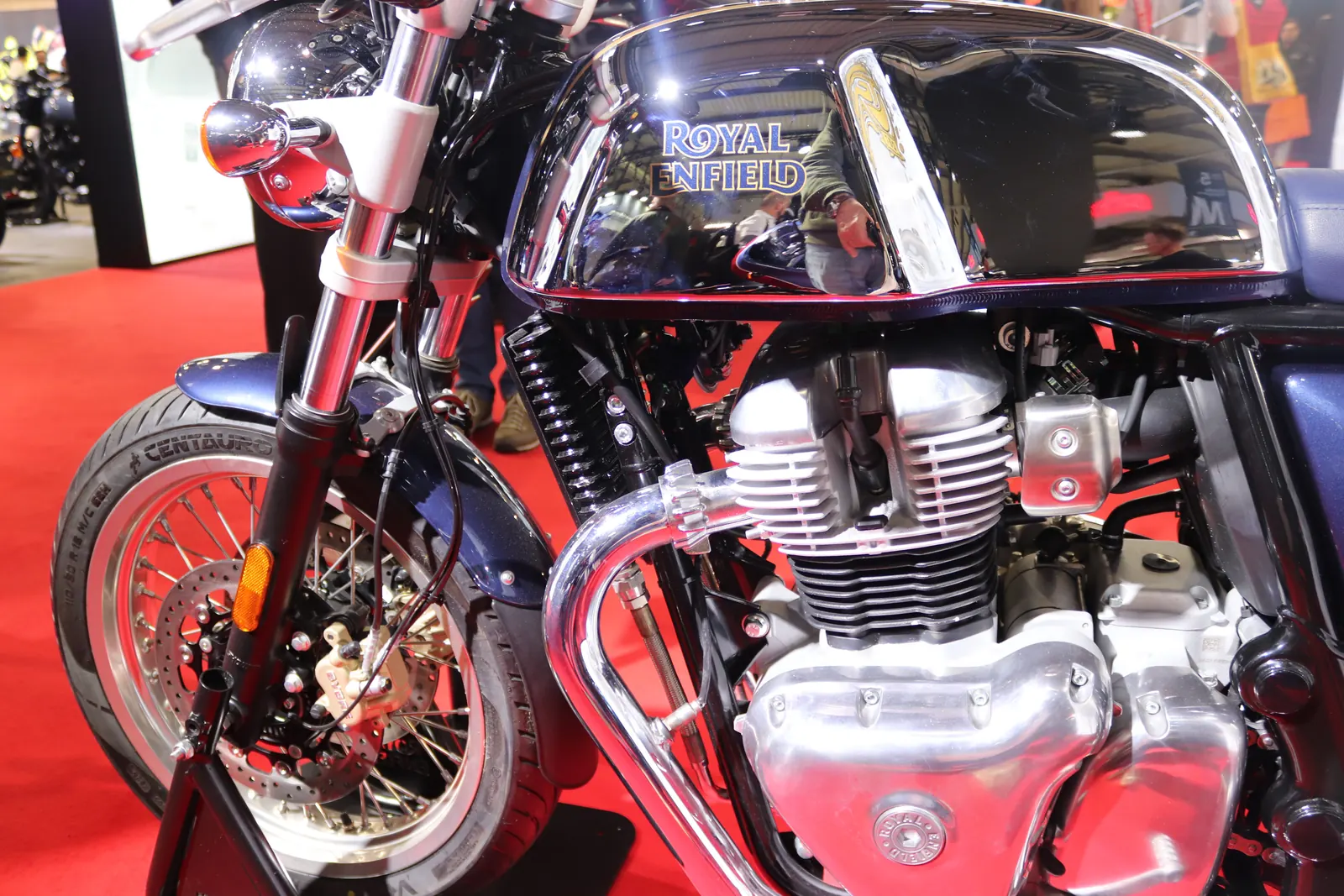
I came face to face with it on the Royal Enfield stand and for a moment I was a teenager again. At first glance it really does recall the bikes of the seventies, the ones I'd stare at for hours, dreaming of owning one. The long tank, the finned twin on show, the chrome catching the hall lights: standing in front of it I felt the same thrill I felt back then.
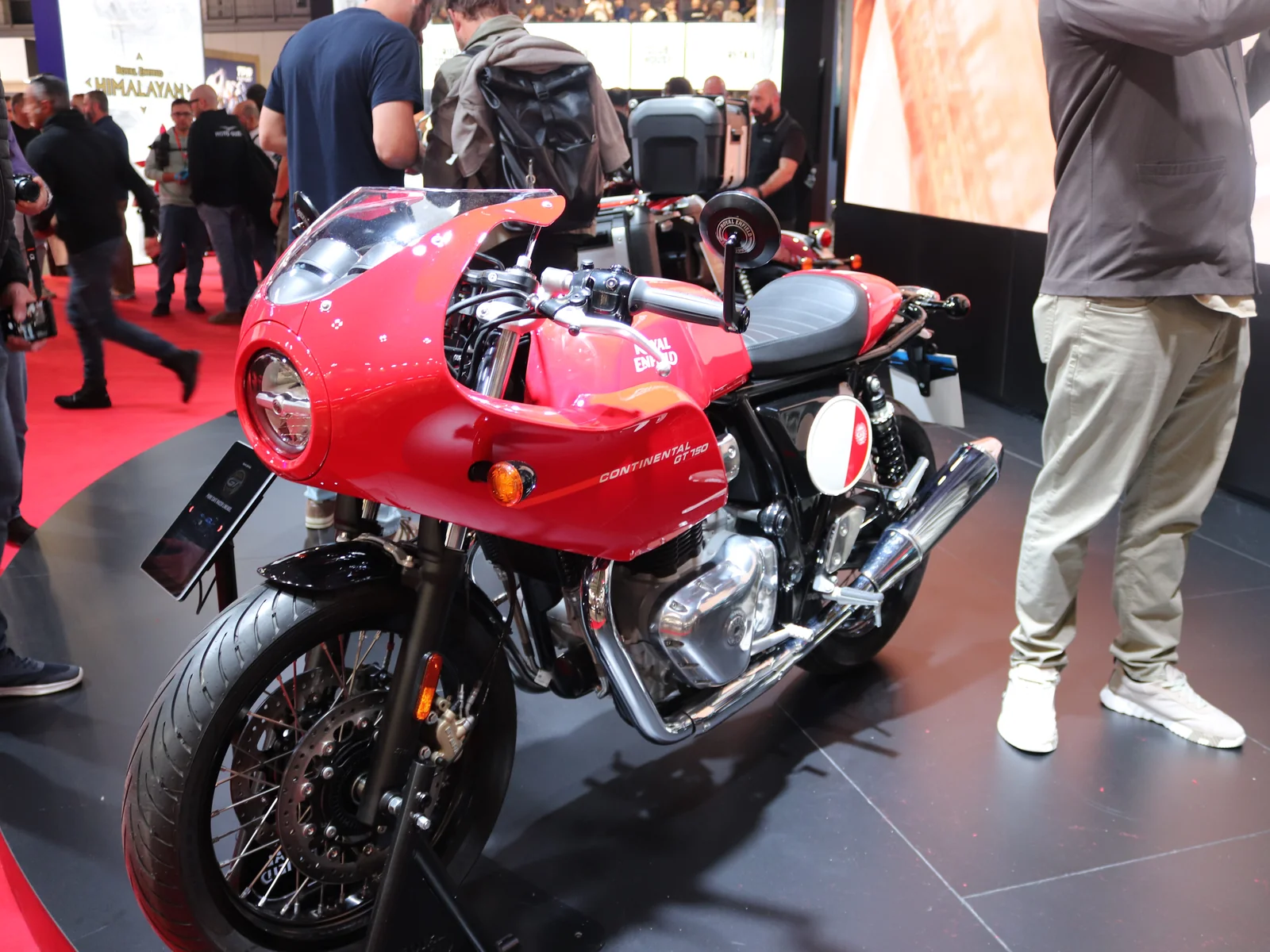
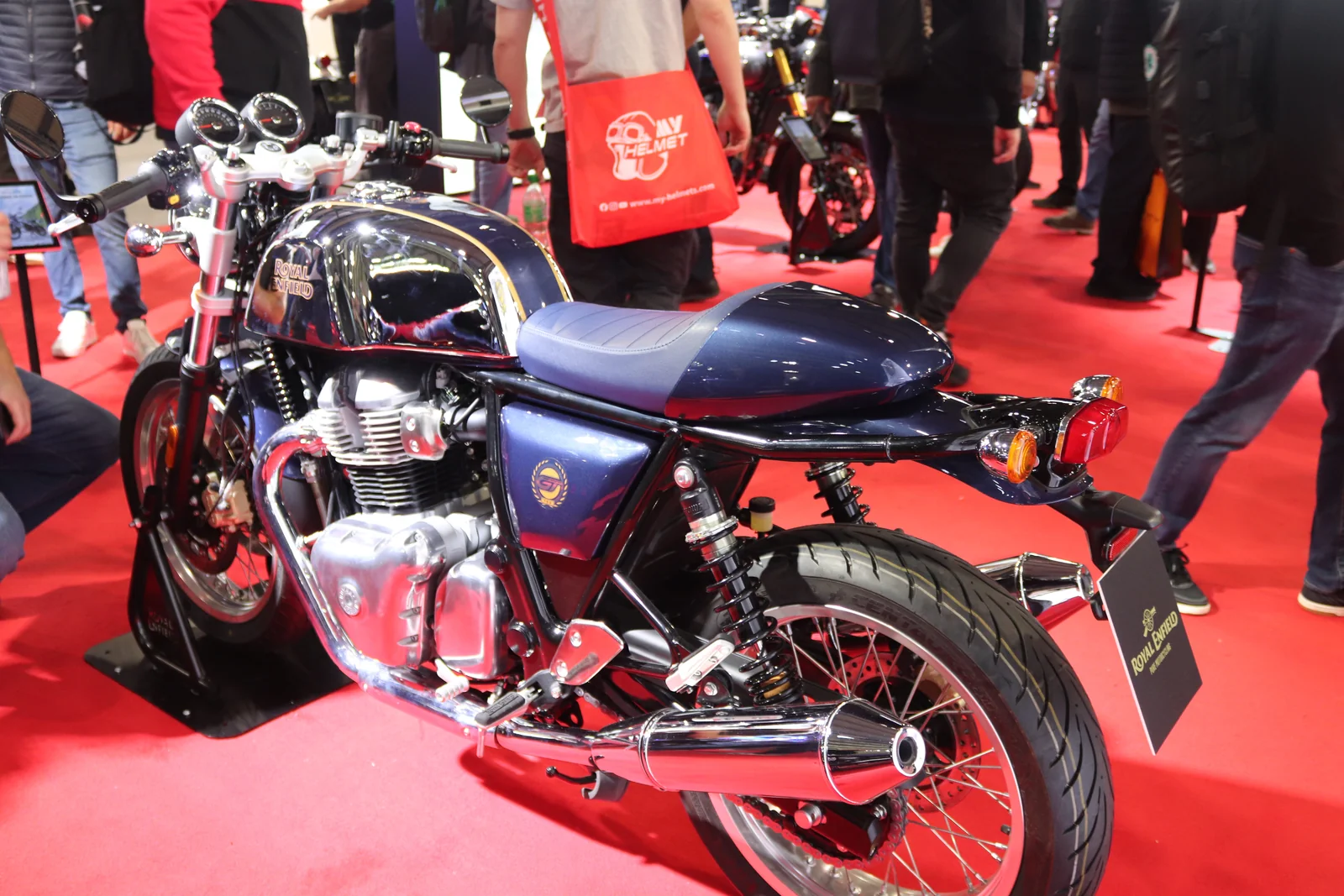
There are two versions and both were on the stand. The half-faired Red Line, red with white stripes, is the sportier one, but it didn't win me over: solid red with a fairing just isn't my thing. The naked Master Clean, on the other hand, I adored. Chrome tank with blue flanks and a gold coach line, blue seat and cowl, spoked wheels, polished engine covers and silencers. That's the one that stole my heart.
1 / 7
Naked or half-faired
The naked bike has an exposed round headlight and higher, comfier bars. The half-faired version adds a round nose fairing with a small screen, lower bars and bar-end mirrors.
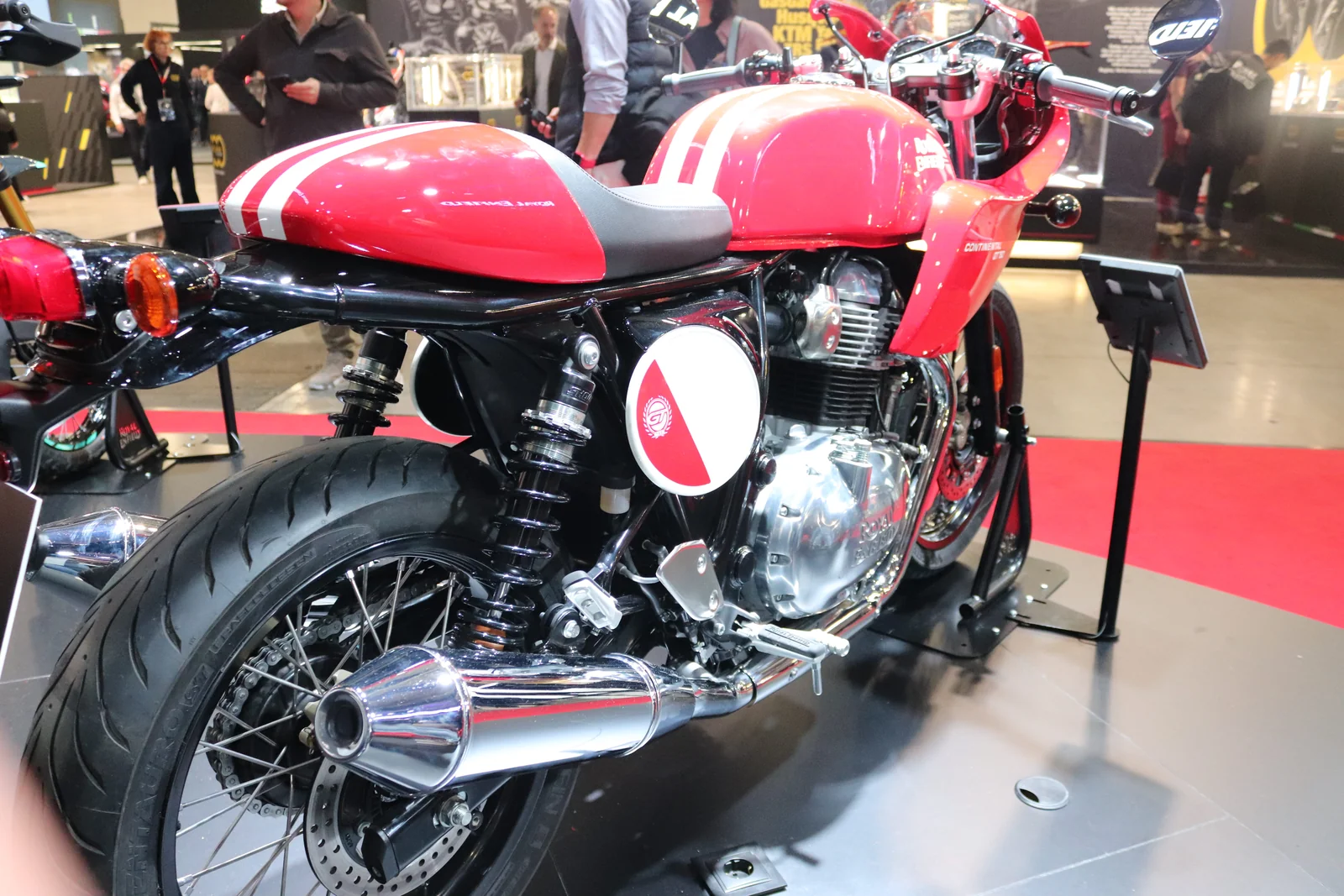
The half-faired bike comes in two colour schemes: Red Line, red with spoked wheels and a polished engine, and TT Blue, blue with alloy wheels and black engine and exhausts. Every version, naked included, has 18-inch wheels and a single seat with a tail cowl that covers the pillion spot and can be removed.
Engine and chassis
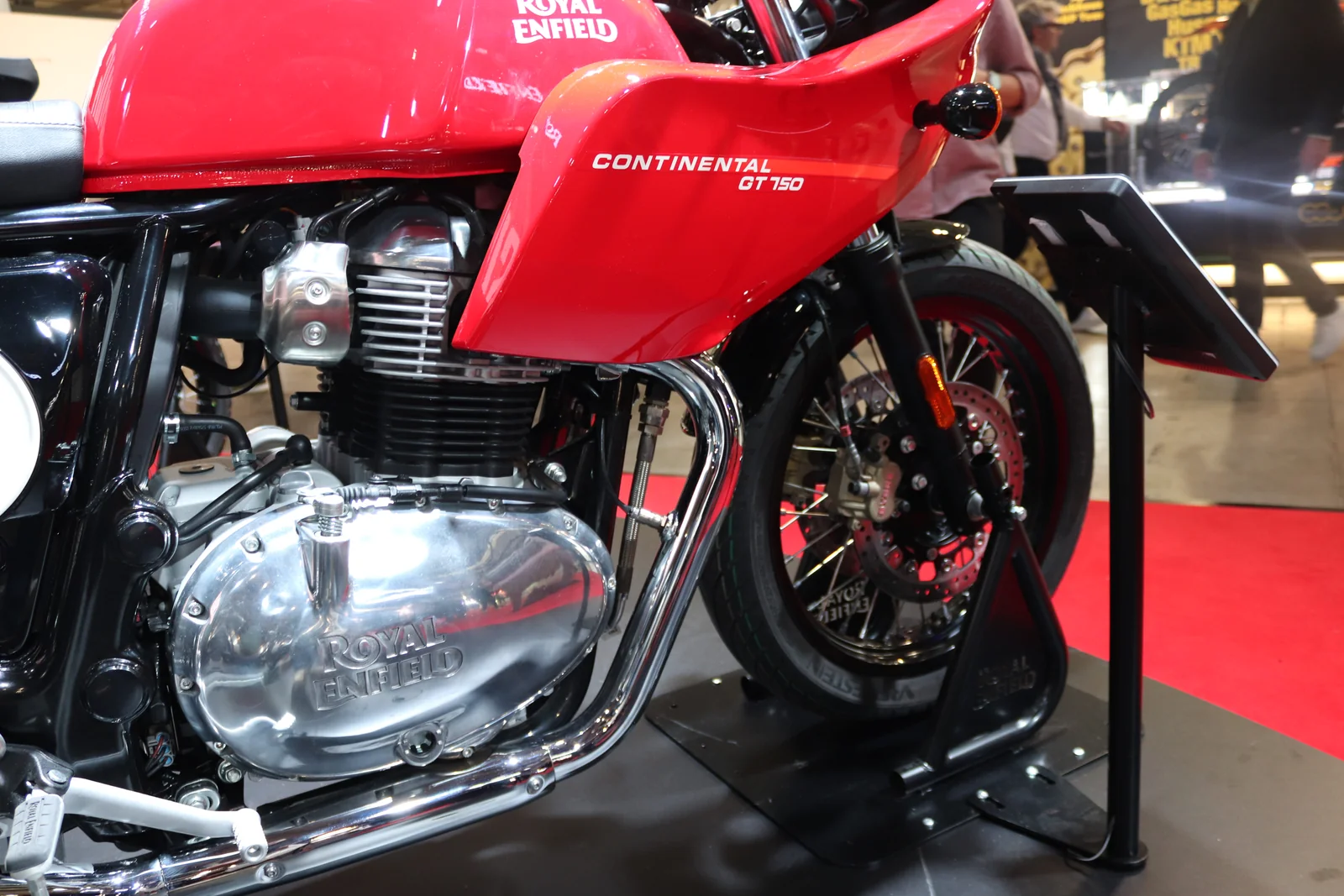
The 743cc is an uprated version of the Himalayan 750's engine, for which Royal Enfield quotes 63 Nm at 5,000 rpm, with 90% of the torque already there at 3,500. There's no official figure for the Continental yet. Compared with the 650, the first thing you notice is the twin front discs in place of the single one. A conventional fork and twin shocks, both preload-adjustable, complete a classic layout.
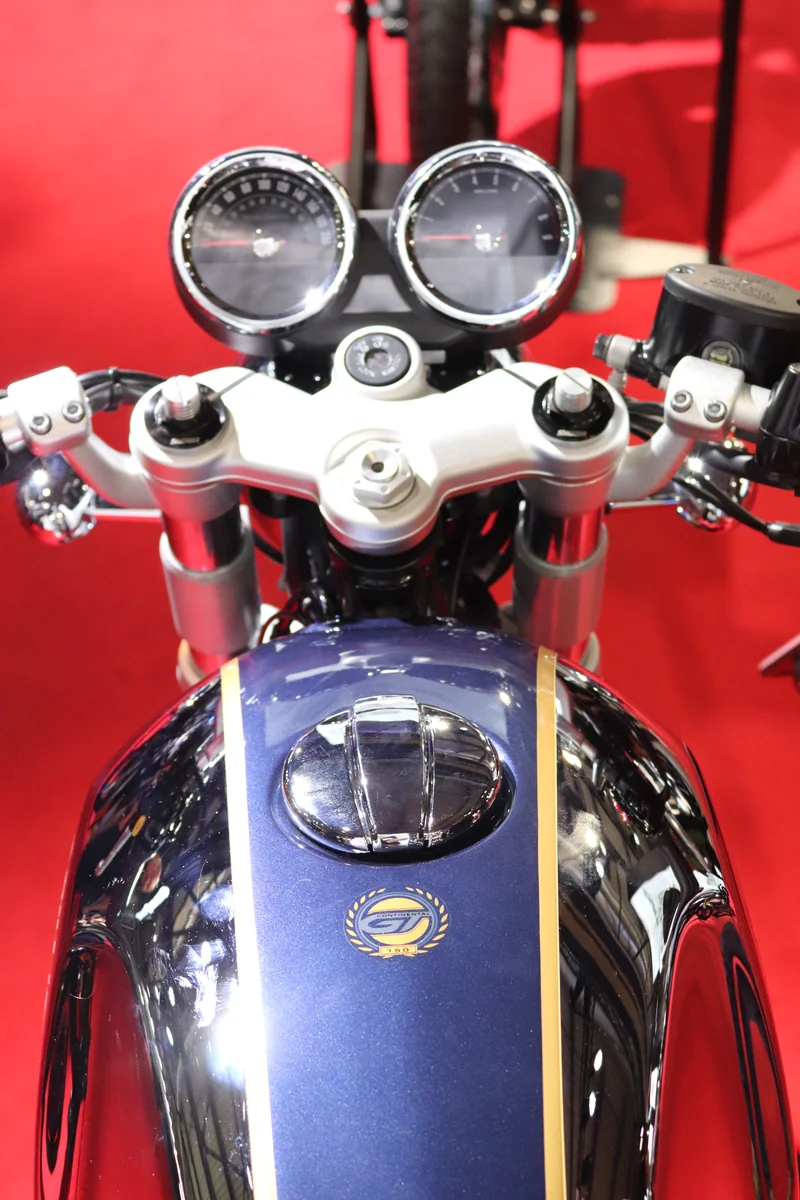
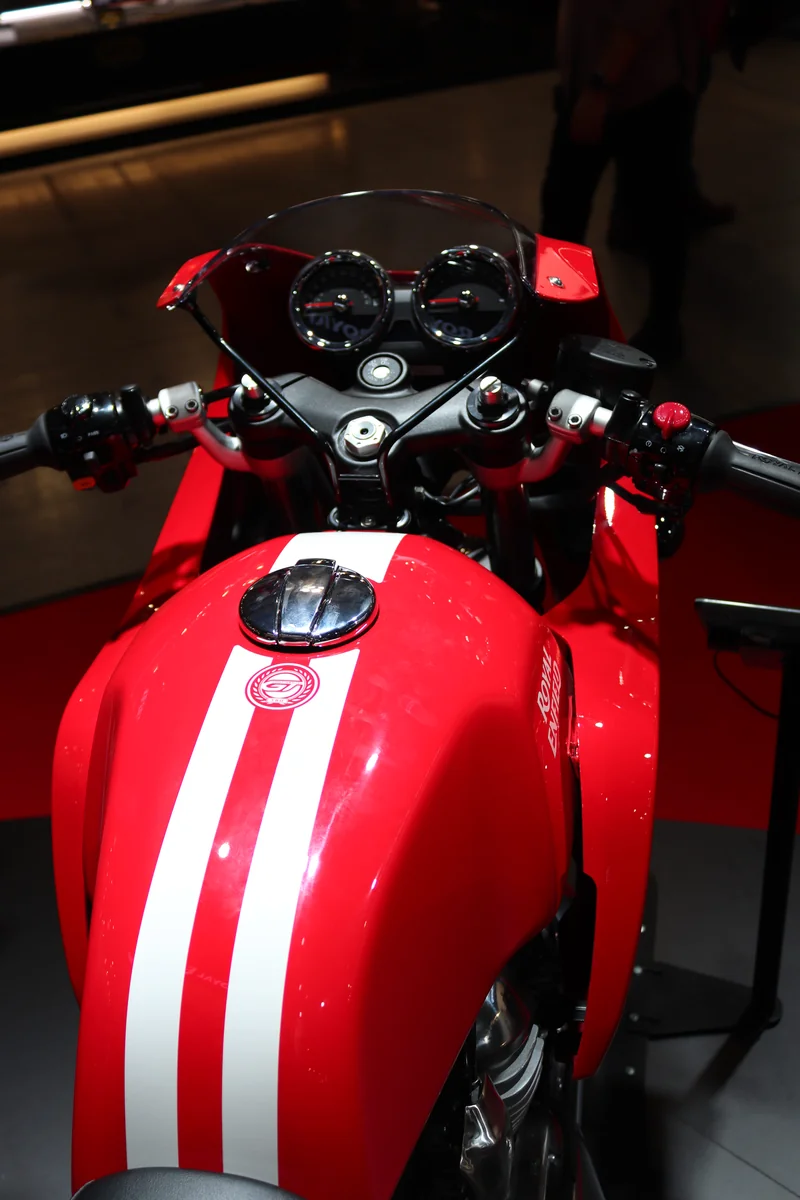
There are still two clocks, round and side by side as on the 650. Inside are real needles and a small digital display: Royal Enfield calls it a hybrid TFT. The company hasn't said anything yet about electronic aids or riding modes.
I haven't ridden it yet and I absolutely have to. I won't hide that I'm giving it serious thought: if the road confirms what I felt on the stand, it could well end up in my garage. I'll update this page after the test ride and once the spec sheet and Italian price list arrive.
Historical context
The Continental GT name was born in England in 1964, when Royal Enfield still built its bikes in Redditch. It was a 250 single with the full café racer kit as standard: clip-ons, a red glassfibre tank, a small flyscreen, rearsets. The advertising called it Britain's fastest 250, and it was the bike every lad dreamed of as his first machine.
The brand survived in India, where it's now part of the Eicher Motors group. The Continental GT returned in 2014 with the 535cc single and then, from 2018, with the 650 twin that introduced Royal Enfield to a whole new audience, in Europe too. With its air/oil-cooled twin and simple chassis, the 650 proved that a modern classic could still be honest and affordable.
The 750 is the next step. It arrives with the Himalayan 750 at a time when retro-styled middleweights are multiplying, and for the first time takes Royal Enfield's modern range beyond 650cc.
Main versions
Continental GT 750 naked, Master Clean (from 2027): exposed round headlight and higher bars. Chrome tank with blue flanks and gold coach lines, blue seat and cowl, spoked wheels, polished engine covers and silencers.
Continental GT 750 half-faired, Red Line (from 2027): round nose fairing with small screen, low bars, bar-end mirrors. Red with white stripes and a race number on the side panel, spoked wheels, polished engine.
Continental GT 750 half-faired, TT Blue (from 2027): same fairing, blue with red and white details, alloy wheels with tubeless tyres, black engine and exhausts.
Shared mechanicals: 743cc air/oil-cooled parallel twin, twin front discs, 18-inch wheels, hybrid TFT clocks. The colour and version pairings are those seen at EICMA and in the first presentations: the Italian line-up will be confirmed with the price list.
Trivia and anecdotes
To launch the first Continental GT at the end of 1964, Royal Enfield staged a stunt that would make a modern press office smile: a group of journalists took turns riding from John o' Groats in Scotland to Land's End in Cornwall, the full length of Britain. It took them 22 hours and 20 minutes. Meanwhile racer John Cooper lapped an almost icy Silverstone at an average of over 70 mph.
The 750 isn't the first Royal Enfield of that size. In the 1960s, still in England, the company built the 736cc Interceptor, a twin aimed mainly at the American market.
What to check before buying one
The Continental GT 750 isn't on sale yet and there's no Italian price list. When it reaches dealers, here's what's worth checking.
Riding position: the faired version has low bars and café racer footrests. Try it for at least half an hour before choosing it, because it's the version least suited to long trips.
Official figures: power, weight and seat height will decide what to compare it with. Wait for the full spec sheet before placing an order.
Licence: so far Royal Enfield hasn't announced a restricted version for the A2 licence. If that's your licence, ask the dealer before you fall for it.
The dealer network: ask the dealer about service intervals, warranty and parts for the new engine, since the 743cc twin is only just making its debut.
Analysis
Strengths and weaknesses
Strengths
Seventies café racer lines, with a choice of naked or half-faired.
The naked Master Clean, with its chrome and blue tank, is love at first sight for anyone into classics.
A new 743cc twin, the highest-performing engine in a production Royal Enfield according to the company.
Twin front discs, replacing the 650's single disc.
Round clocks with an integrated TFT that keep the classic look.
Weaknesses
Power, weight and price not yet announced: for now it can't be compared with rivals.
No A2 licence version announced, unlike the 650, which is also sold restricted.
The half-faired version's riding position is demanding for long-distance riders.
Spoked wheels with inner tubes on Red Line and Master Clean: a puncture is harder to fix.
A brand-new engine, and deliveries only in 2027.
Who it is recommended for
Café racer fans who want a step up from the Continental GT 650. Full-licence riders looking for a bike with a 1960s British feel, an air/oil-cooled twin and the mechanicals on show. Anyone who likes being able to choose between a naked and a faired version of the same model.
Who it is not recommended for
Riders on an A2 licence, until a restricted version is announced. Anyone after a comfortable bike for long two-up trips, especially in faired form. Anyone who has to decide now: without official figures or a price, a serious comparison with other classic middleweights isn't possible yet.
Buying advice
Wait for the price list and the full spec sheet, then ride the two versions back to back: higher bars or clip-ons change everything. Compare it with the Continental GT 650 at the same dealer, to see whether the bigger engine and twin discs justify the price difference.
Known issues
The Continental GT 750 isn't on sale yet, so there's no data on faults or recalls. The 743cc twin debuts alongside the Himalayan 750: to judge reliability we'll have to wait for owners' first miles. I'll report here as soon as there's real news.
Spare parts availability
It's a new bike from Royal Enfield's official network, which has dealers and authorised workshops in Italy. The engine is shared with the Himalayan 750, which should help parts availability. The fairing, tank and seat are specific to the Continental. Details will become clear once it reaches dealers.
Used market value
Not on sale yet: Italian price not announced
Value for money
There's no official price yet. For reference, the Himalayan 750 with the same engine has been announced in Italy from €7,390. I'll give a verdict on what it offers for the money once there's a Continental price list and a road test.
Final review
Standing in front of the Continental GT 750 I was a teenager again, looking at a bike and dreaming about it. It takes a name born in 1964 and puts it on a bigger twin, without giving up the exposed mechanicals and café racer lines. The naked Master Clean won me over. The numbers and a road test are still missing: the score will come later, and I hope to give it as an owner.
Equipment
Accessories
Rear paddock stand
Maintenance
Recommended
The Continental is chain-driven: cleaning, lubricating and adjusting the chain is far easier with the rear wheel off the ground. Choose a paddock stand with forked pads or bobbins, checking first that the swingarm has mounts for them, and keep it in the garage for everyday maintenance.
Tank bag
Luggage
Recommended
Panniers look wrong on a café racer and the solo seat leaves no room. A small tank bag carries documents, gloves and a rain suit. Strap or filler-ring mounting is better than magnets, which don't sit well with a chrome tank or carefully finished paintwork.
Tank knee pads
Protection
Recommended
With your knees gripping the tank, as a café racer asks, the paint soon gets marked. A pair of rubber or leather knee pads protects the sides and improves grip. Choose slim ones shaped to the tank's scallops, so they don't spoil the line.
Indoor bike cover
Protection
Recommended
Chrome, fairing and painted tank don't like dust and damp. A breathable garage cover with a soft lining keeps the bike clean between rides without trapping condensation. Waterproof outdoor covers only work if they're vented, otherwise they encourage rust on the chrome parts.
We and selected third parties use cookies or similar technologies for technical purposes and, with your consent, for other purposes (analytics and statistics) as specified in the privacy policy and the cookie policy. You can consent to the use of such technologies by accepting this notice.
Tracking options
Customise your cookie preferences by purpose.
Technical and Session Cookies (Necessary)
Essential for using the site.
Analytics and Statistics
They help us understand how users interact with the site.