

Moto Guzzi
Italy · Bikes since 1921
A history spanning 105 years
If there is one sound an Italian rider would know with eyes shut, it is a Guzzi V-twin burbling at idle, the whole bike rocking slightly to one side when you blip the throttle at a standstill. Anyone hunting for a classic Moto Guzzi is really buying that character, built over more than a century on the shore of Lake Como, at Mandello del Lario, where the factory still works today.
Three friends and an eagle
The story starts during the First World War, in the Italian Navy's air service. That is where Carlo Guzzi, a mechanic with a head full of ideas, met Giorgio Parodi, a pilot and the son of a Genoese shipowner, and Giovanni Ravelli, an airman who also raced. They agreed to build motorcycles together once the war was over. Ravelli was killed in August 1919 during a test flight, and the spread-winged eagle on the badge is dedicated to him.
The first prototype was called the G.P., for Guzzi and Parodi. On 15 March 1921 the Società Anonima Moto Guzzi was founded in Genoa, with money from the Parodi family, and that spring the Normale left Mandello: 500cc, a horizontal single, just over 8 hp and around 85-90 km/h. By 1924, 2,065 had been built. That forward-leaning cylinder would remain Guzzi's trademark for more than forty years.
Racing and the wind tunnel
Guzzi grew by racing and travelling. In 1928 Giuseppe Guzzi, Carlo's brother, rode the G.T. with its sprung rear end all the way to the Arctic Circle, and the bike earned the nickname Norge. In 1935 Irishman Stanley Woods won both the Lightweight and the Senior at the Isle of Man TT, and in 1937 Omobono Tenni became the first non-British rider to win a TT race.
In 1950 Mandello got a wind tunnel, the first in the world built for motorcycles. It shaped the fairings of the Guzzis that won five 350cc world titles in a row between 1953 and 1957. Giulio Cesare Carcano even designed a 500cc Grand Prix bike with eight cylinders in a V. At the end of 1957, though, Guzzi pulled out of racing along with Gilera and Mondial: it cost too much and sales were falling.
From the Guzzino to the Falcone: the post-war bikes
After the war Italy needed cheap transport. Guzzi answered with the 1946 Guzzino 65, a lightweight sold in tens of thousands, then the Galletto, half motorcycle and half scooter, and later the Lodola and the Stornello. The Airone 250, launched before the war, remained the most popular mid-sized bike in Italy for years.
For those who dreamed of a proper motorcycle there was the Falcone 500, shown in 1950: a horizontal single, a big outside flywheel and a slow beat you could hear coming from far away. It was the bike of the traffic police and the presidential Corazzieri, and of many young men who stared at it in a shop window, unable to afford one. It stayed on sale until 1967 and is still one of the most sought-after classic Guzzis.
The V-twin and the De Tomaso years
The sixties were hard: families were buying cars, sales collapsed, Carlo Guzzi died in 1964 and in 1967 the factory passed to SEIMM, a state-controlled company. What saved it was an engine: Carcano's 90° V-twin mounted across the frame, with shaft drive. It made its debut in the V7 700, designed with the police and the Carabinieri in mind too, and became the heart of every Guzzi that followed.
Mine is one of them: a 1968 V7 built for the Italian Army, found in a farmhouse after more than 25 years, and being restored right now. I will tell its story here on the site.
Lino Tonti put that engine in a low, narrow frame and in 1971 the V7 Sport was born, the first sports bike with the Mandello V-twin. Around the same time came the 850 GT and the California, the tourer with screen and panniers inspired by the Guzzis chosen by the Los Angeles police.
In 1973 Guzzi was bought by the Argentine industrialist Alejandro De Tomaso, who already controlled Benelli. Then came the Le Mans 850, unveiled at the end of 1975, one of the best-loved Italian sports bikes of the seventies, and at the end of the decade the small V35 and V50, with a more compact and lighter V-twin, aimed partly at an Italian market where bikes over 350cc were heavily taxed.
From crisis to the present day
The eighties and nineties were the toughest years: ageing models and little money, and in 1993 output fell to just over 3,000 bikes. In 2000 Guzzi was taken over by Aprilia and in 2004, together with Aprilia, by the Piaggio group, which still owns it.
The revival came in 2008 with the new V7, which borrowed the tank and the spirit of the V7 Sport and became one of Guzzi's most successful models. The California 1400 and the V9 followed.
In 2021 Guzzi turned a hundred, still at Mandello. For those of us who mostly look back, the nice thing is that a Falcone, a V7 700 or a Le Mans still look like close relatives of today's Guzzis: the same burble, the same low-down torque, the same unhurried way of going down the road.
Moto Guzzi models
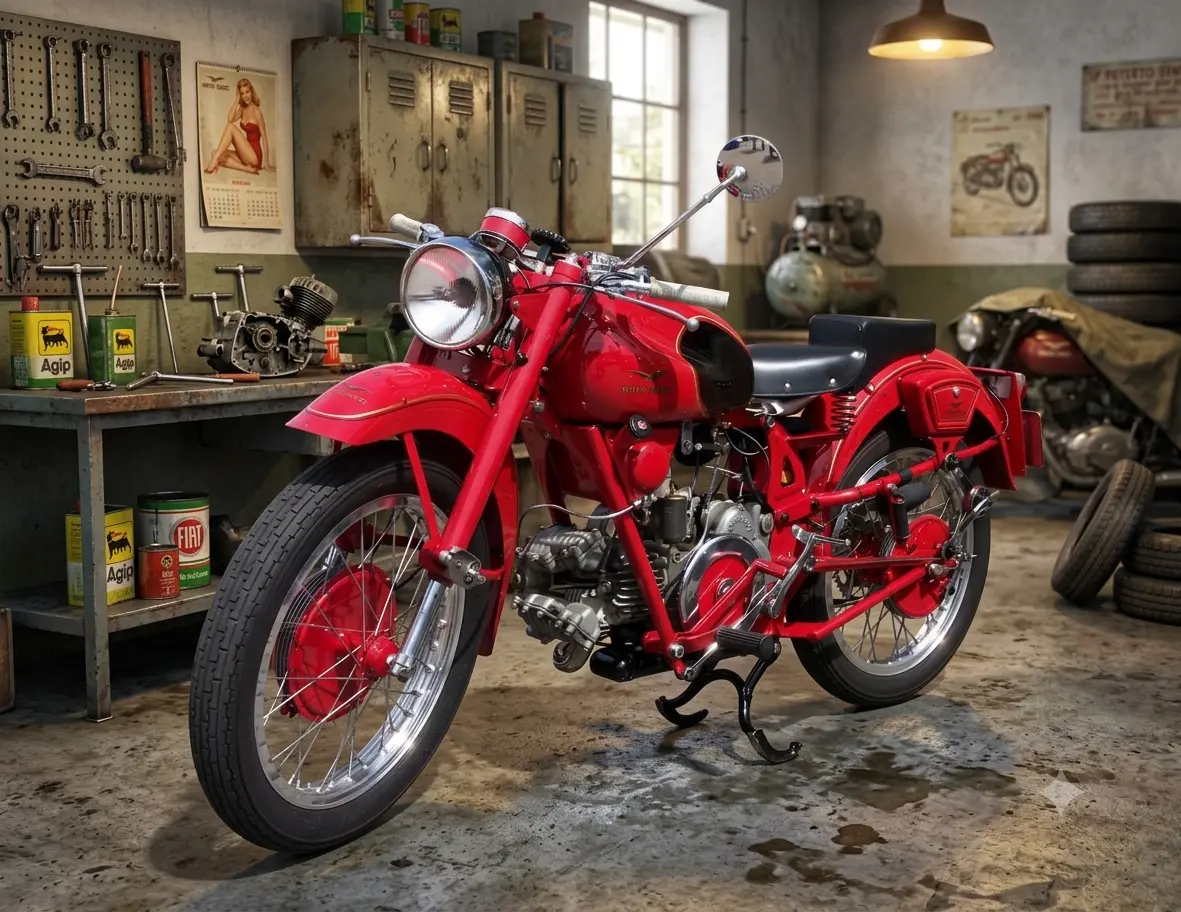
Falcone 500
The Falcone 500 is the last evolution of the famous horizontal single that accompanied Moto Guzzi from the early 1920s. Unveiled at the Geneva Motor Show in 1950 as the successor to the GTW, it…
Read the full profile →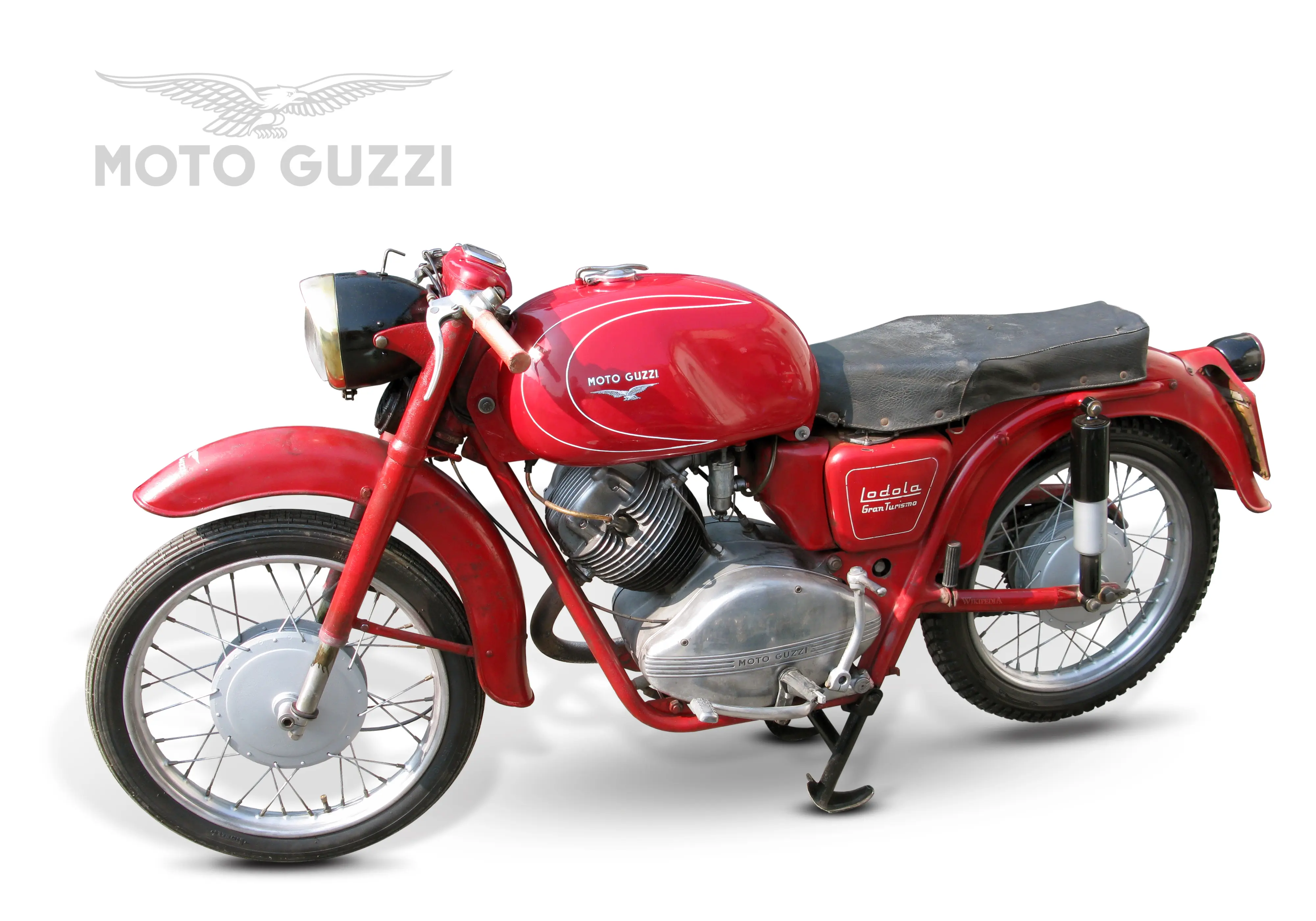
Lodola 175
The Lodola 175 marks a clear technical break with Guzzi tradition: in place of the classic horizontal single, it offers an inclined engine with a single overhead camshaft, a decidedly modern solution…
Read the full profile →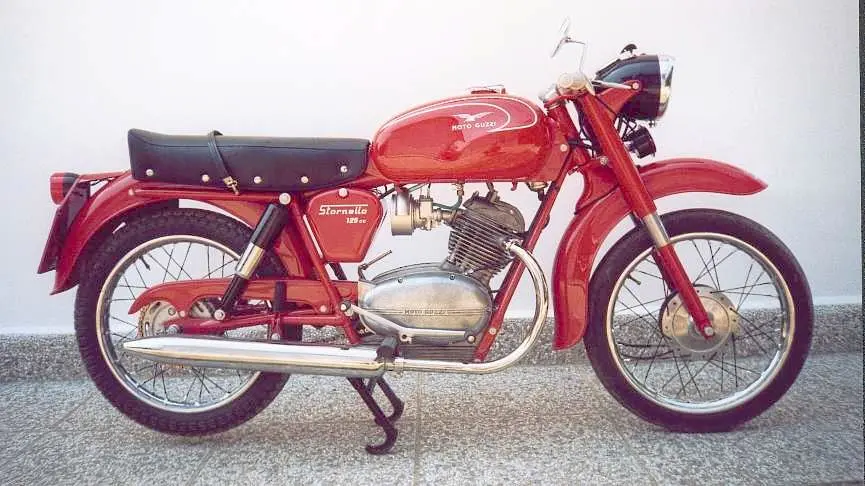
Stornello
The Stornello was Moto Guzzi's answer to the motorcycle market crisis of the late 1950s, when the spread of small cars put the whole sector in difficulty. Conceived as an economical, reliable bike…
Read the full profile →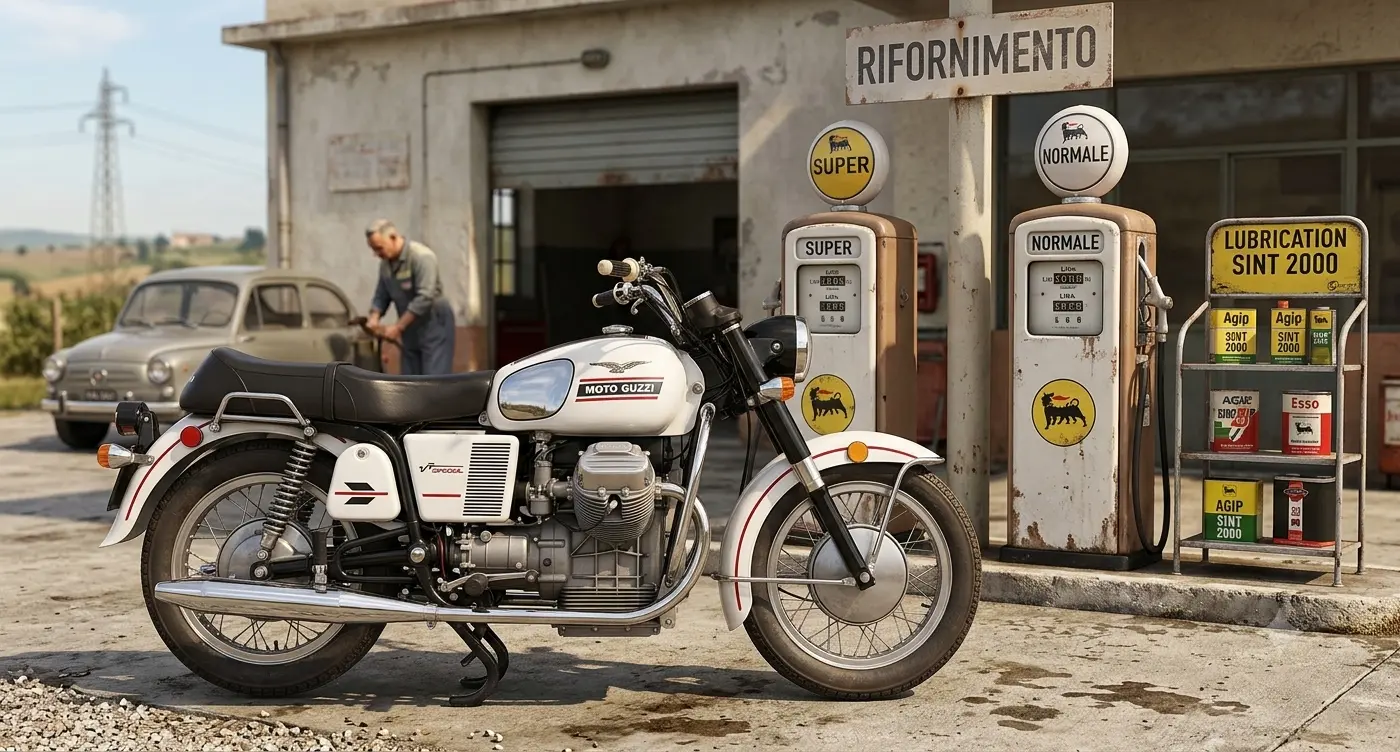
V7 700
The Moto Guzzi V7 700 is where everything we now link to the Mandello del Lario factory began: the 90° V-twin mounted across the frame, with the cylinders poking out either side of the tank, and a…
Read the full profile →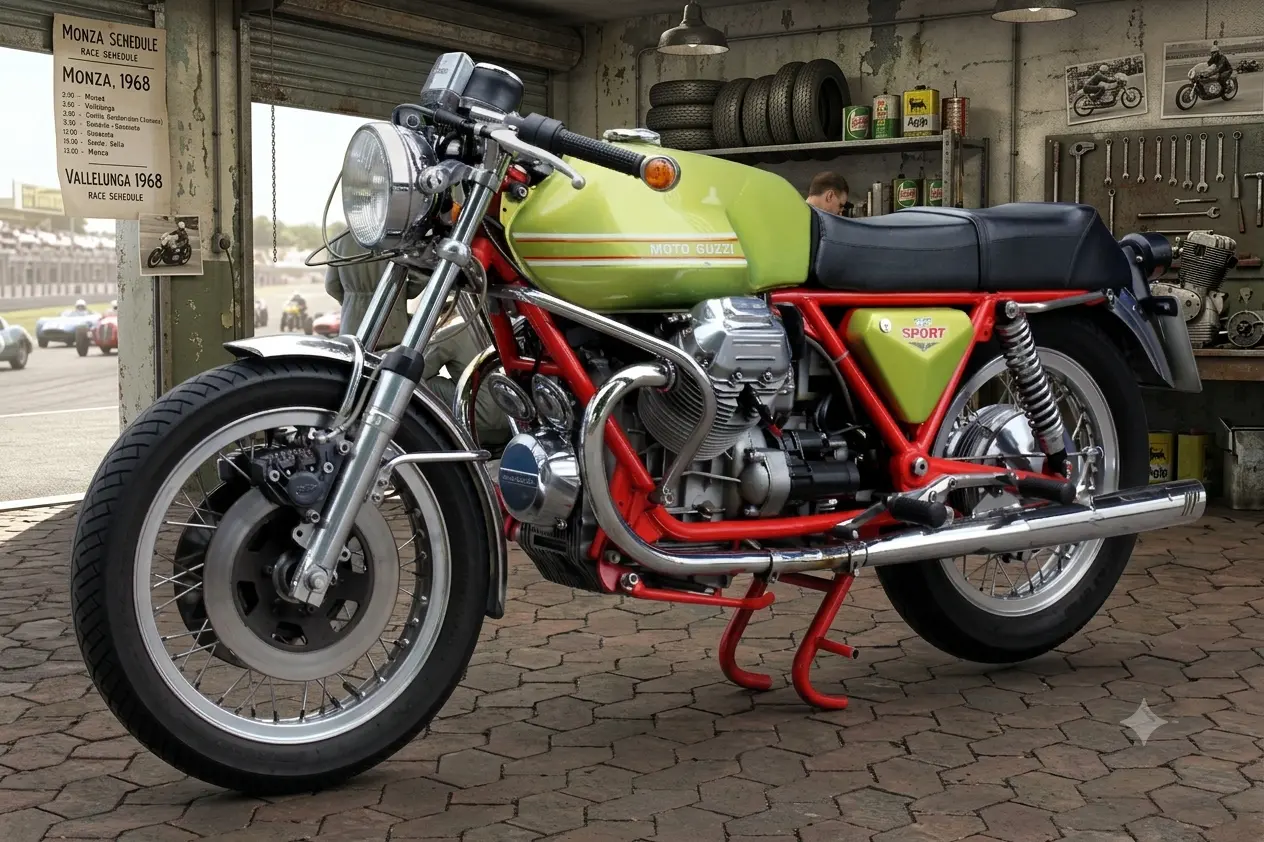
V7 Sport
The V7 Sport is the masterpiece with which designer Lino Tonti radically redrew the soul of the twin-cylinder Guzzi, turning a solid touring bike into a true sports benchmark for the whole European…
Read the full profile →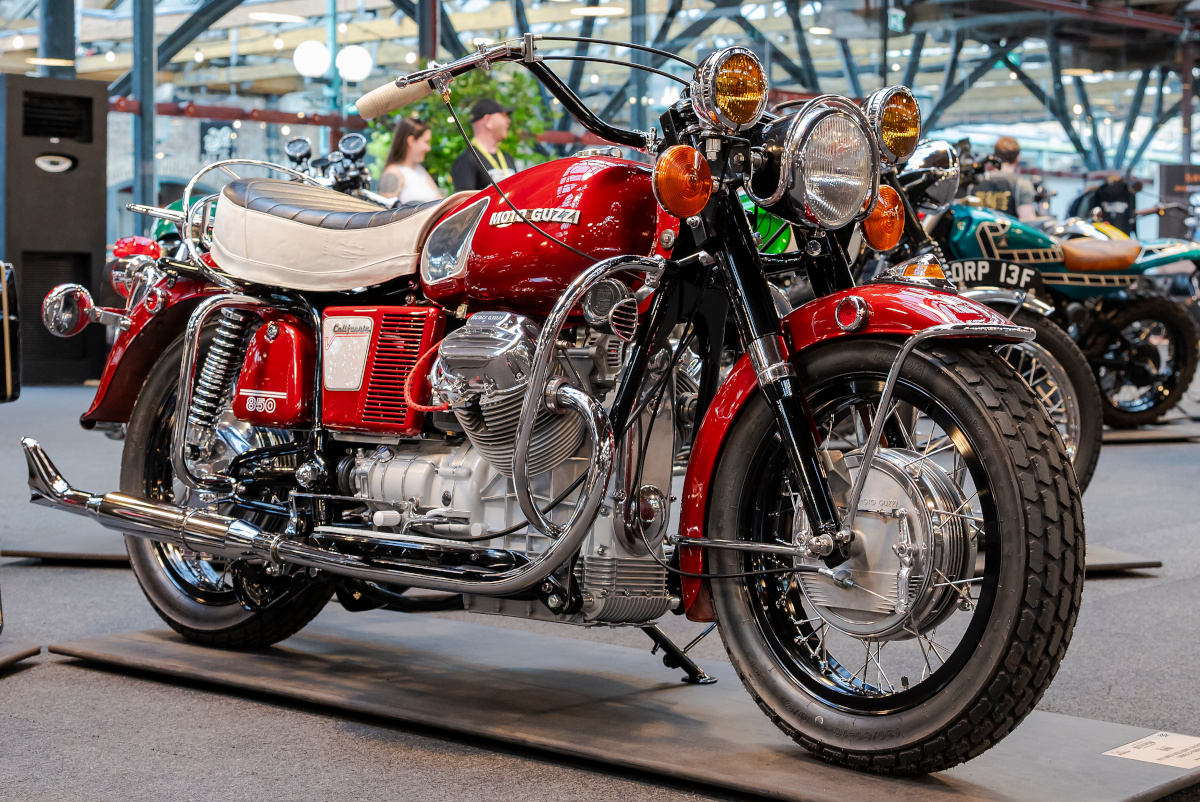
850 GT
An Italian grand tourer with the character of the Guzzi twin The Moto Guzzi 850 GT is one of the great Italian roadsters of the early 1970s: a motorcycle built to eat up the miles, with a generous…
Read the full profile →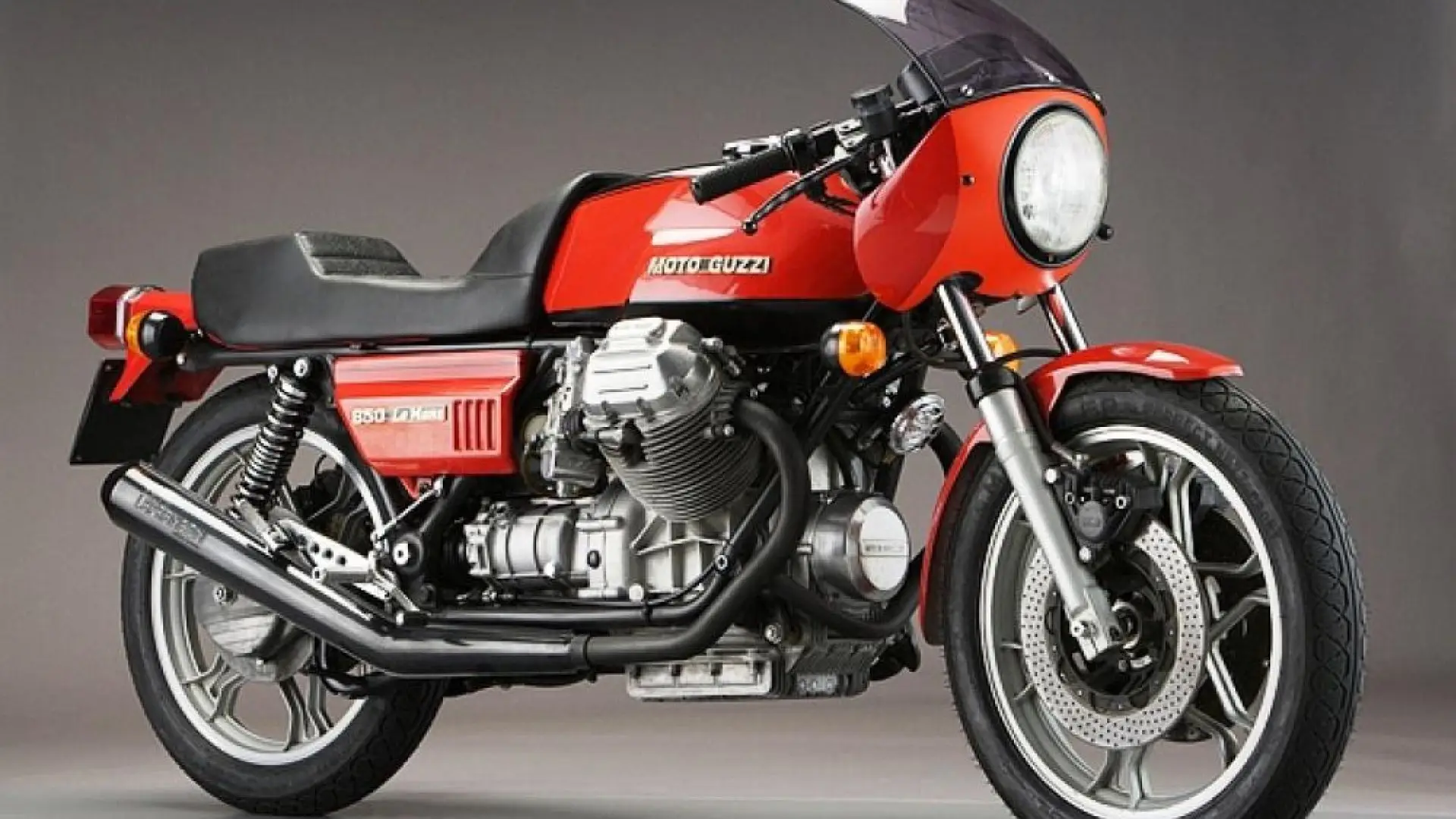
Le Mans 850
The Le Mans 850 is arguably the most famous sports bike in Moto Guzzi's history: derived directly from the V7 Sport, it combines a visually striking aerodynamic fairing with a V-twin delivering…
Read the full profile →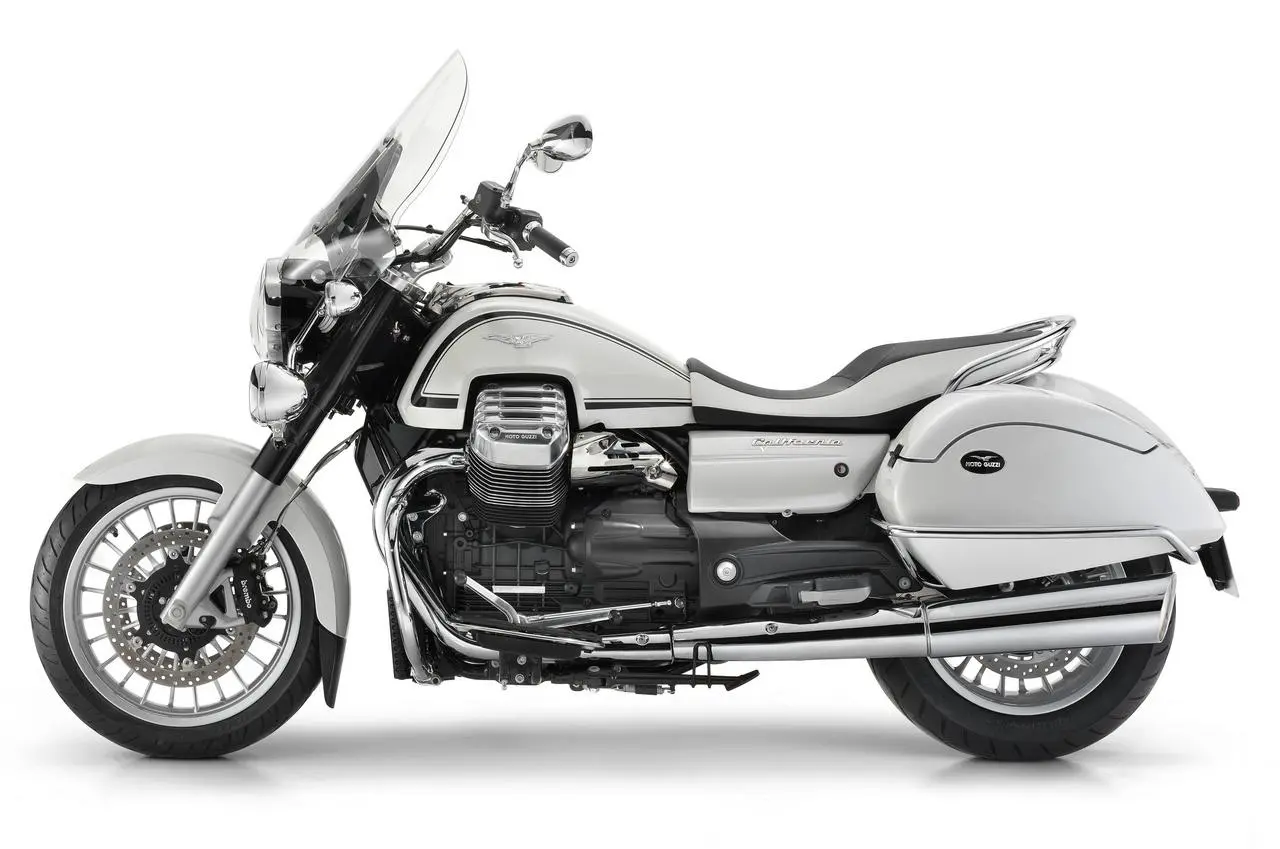
Moto Guzzi California 1400
The California 1400 is the ultimate expression of the luxury cruiser according to Italian engineering. With its imposing 1380 cc twin, it combines the majesty of the great American tourers with the…
Read the full profile →