
Ducati
Italy · Bikes since 1926
A history spanning 100 years
Ducati: Borgo Panigale, desmodromics and the school of Fabio Taglioni
Ducati’s story has an unlikely beginning: radio condensers. It is 1926, in Bologna, and Antonio Cavalieri Ducati founds, together with his sons Adriano, Bruno and Marcello, the Società Scientifica Radio Brevetti Ducati. The motorcycles came later, almost out of necessity, and for a while they were just an idea of cheap transport. Today it is hard to imagine a rider with no opinion about Ducati, and that opinion almost always has to do with a 90-degree angle, a stubborn engineering choice and one man: Fabio Taglioni.
From radios to the Cucciolo
In 1935 the company moved to the new factory at Borgo Panigale, on the edge of Bologna, which would be largely destroyed by bombing in 1944. After the war it had to restart with something useful: the Cucciolo, a small auxiliary engine for clipping onto bicycles, born at SIATA in Turin and built by Ducati under licence. It was the mobility of an Italy that needed putting back on the road. Real motorcycles followed, among them the 1949 Ducati 60, and in the early 1950s the company came under public ownership through IRI.
The "Doctor T" and desmodromics
In 1954 the engineer Fabio Taglioni joined the company. His first masterpiece was the 98 Gran Sport of 1955, nicknamed "Marianna", which won the Milano-Taranto, but his real obsession was something else: desmodromic valve gear. In an ordinary engine a spring closes the valve after the cam has opened it; at high revs the spring cannot keep up and the valve "floats", in other words it bounces. With desmodromics a second rocker closes the valve mechanically, without relying on springs. The system made its racing debut in 1956 on a 125 and reached production bikes in 1968, with the Mark 3 Desmo singles. Ducati has made it a signature and still uses it today, in spite of those who for years considered it an expensive eccentricity.
The V-twin and Imola 1972
In the 1960s Ducati sold elegant, light singles such as the Elite 200, the Mach 1 and the style phenomenon that was the Scrambler, hugely popular with young Americans. Then, around 1970, Taglioni drew the 90-degree V-twin that would remain the foundation of the company. It debuted on the 750 GT, but its real baptism came at the 1972 Imola 200 Miles, where Paul Smart won ahead of his team-mate Bruno Spaggiari. From that victory came the 750 SS "Green Frame" of 1974, with its green frame and round engine cases, built in a few hundred examples and today among the most sought-after of all, and the 900 SS of 1975, one of the most beautiful road sports bikes of the era. In 1978 Mike Hailwood, back racing after more than a decade, won the Isle of Man Tourist Trophy on a Ducati 900 prepared by NCR: a story that riders are still telling today.
Pantah, Cagiva and the Monster
The 1979 Pantah was Taglioni’s last project: a 500 V-twin with timing driven by toothed belts, lighter and cheaper than its predecessors and destined to become the engine of a whole new family. In 1985 Ducati was taken over by the Castiglioni brothers’ Cagiva, which put it back on track. In 1993 came the Monster, designed by Miguel Galluzzi, who invented the modern naked bike starting from very little: a trellis frame, a tank and an engine. In 1994 came Massimo Tamburini’s 916 and Carl Fogarty’s first World Superbike title. From 1996 ownership passed to American investors; since 2012 it has belonged to Audi, and therefore the Volkswagen group.
Collecting a vintage Ducati
Ducatis built up to the mid-1980s are among the most coveted Italian bikes among collectors, in three very different worlds. The singles (Mach 1, Scrambler, Mark 3, Diana) are connoisseurs’ bikes, with widely varying values. The "bevel" twins, so called for the bevel-gear shafts that drive the valve gear, are the heart of the story: the 750 SS is out of reach, but the 900 SS and the Darmah are still more attainable. Finally the Pantah and the first belt-driven bikes make a good way in.
Two practical tips. First: on a desmodromic engine, valve adjustment must be done by someone who knows the system, and it is the first thing to look for in the service invoices. Second: a great many vintage Ducatis have been rebuilt with parts from different production runs, so before paying a collector’s price you need to verify the frame and engine numbers and the paperwork.
The Modern Classics
For those who want the style with fewer headaches there are two routes. The SportClassic bikes of 2006-2010 (Sport 1000, Paul Smart 1000, GT1000), designed by Pierre Terblanche, were long undervalued and prices are now climbing. And then there is the Scrambler, relaunched in 2015 as a brand in its own right with a younger, less nostalgic feel: a good choice if you want the image without the weight of the history.
Ducati models
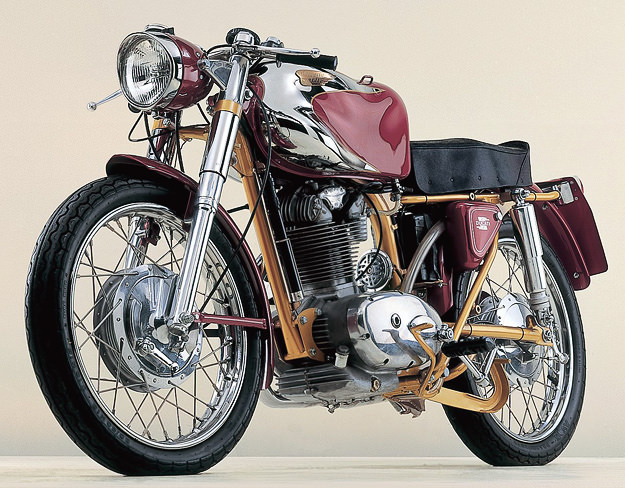
Ducati Elite 200
The embodiment of vintage sporting elegance, famous for its iconic double-hump "jelly mould" tank shaped to take the rider's knees. A quick, racing-minded bike signed by Fabio Taglioni, built to win…
Read the full profile →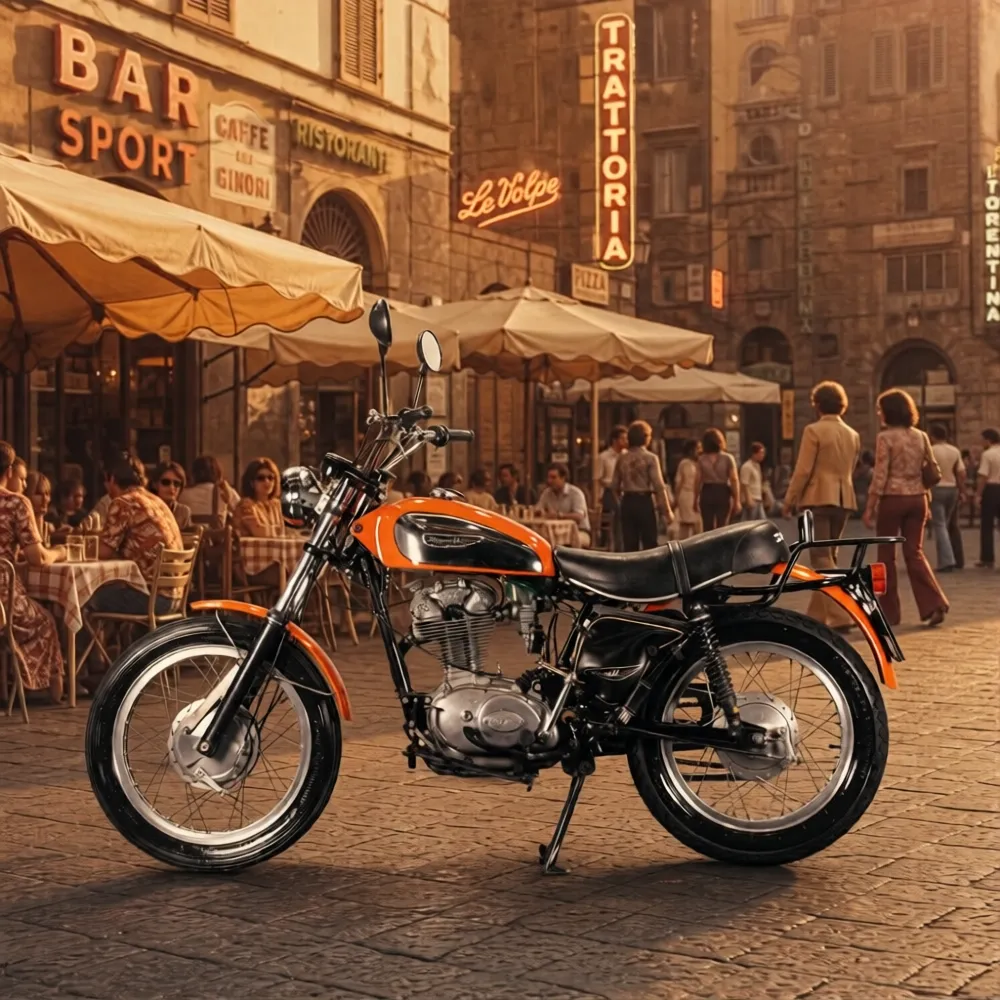
Ducati Scrambler (250/350/450)
The Scrambler from Borgo Panigale is not just a motorcycle but a symbol of generational freedom. A teardrop tank, wide handlebars and a high-level exhaust combine off-road attitude with a unique…
Read the full profile →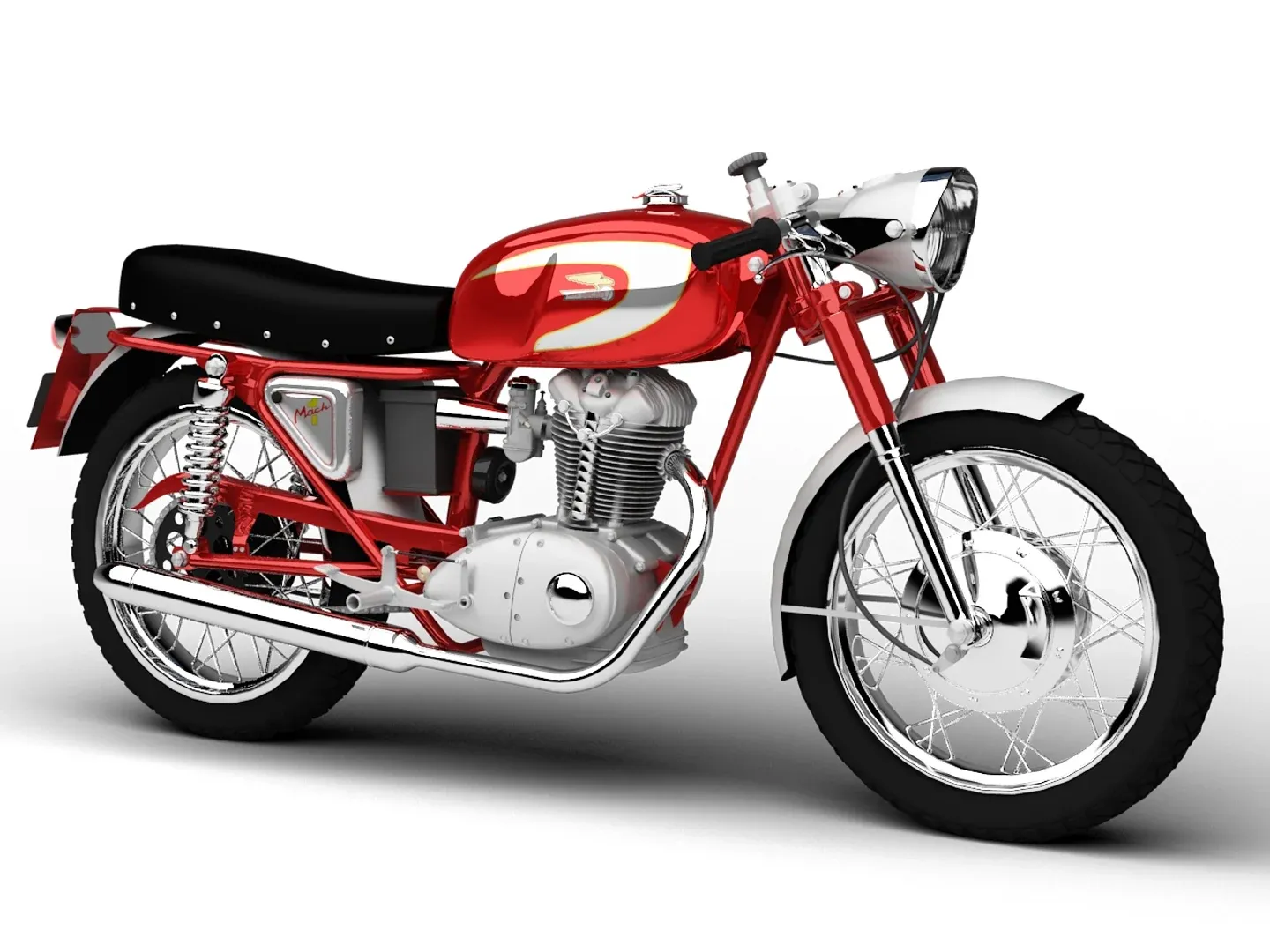
Ducati Mach 1
The Ducati Mach 1 is a sporting 250 built from 1964 to 1966, a bike that tells well the direction Ducati took in the years when small-capacity Italian machines were seeking true sports-roadster…
Read the full profile →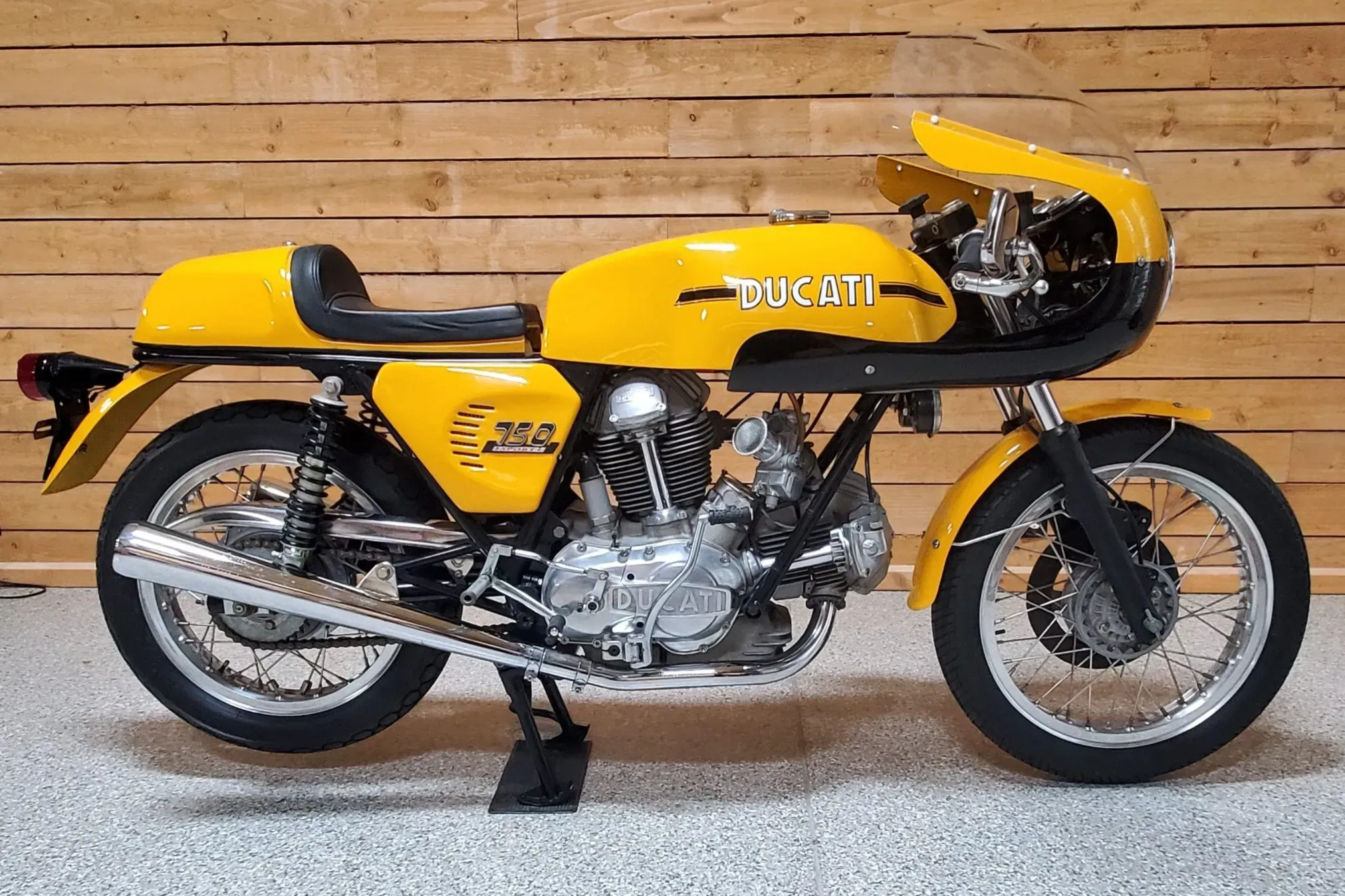
Ducati 750 Sport
Nicknamed the Yellow Cure for its unmistakable yellow-and-black livery, it is a pure café racer derived directly from the racing bikes that won at Imola in 1972. It offers a manly, firm ride with…
Read the full profile →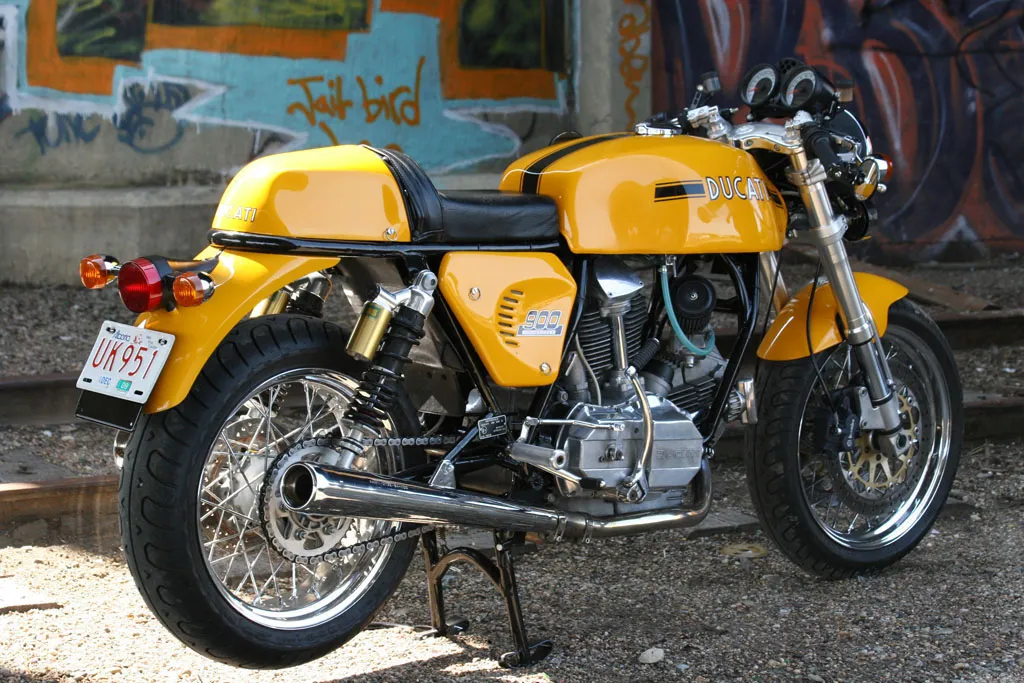
Ducati 900 SS
The ultimate expression of the 1970s supersports bike, powered by the square-case twin with desmodromic valve gear and 40 mm Dell'Orto carburettors with open bellmouths. A legendary motorcycle made…
Read the full profile →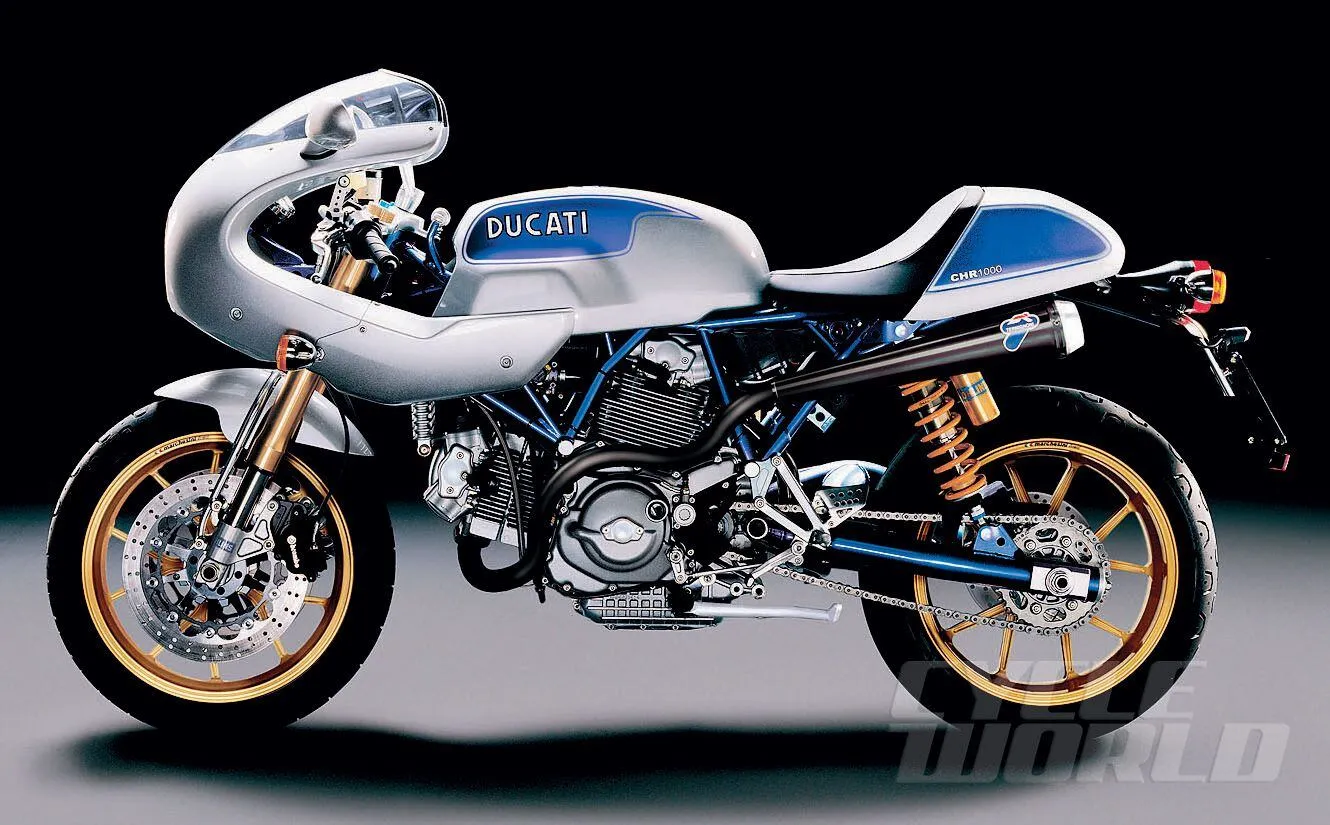
Ducati Paul Smart 1000 LE
A limited series of 2,000 numbered bikes designed by Pierre Terblanche to celebrate Paul Smart's victory at Imola in 1972. Featuring an aqua-green frame, silver fairing and Öhlins suspension, it is…
Read the full profile →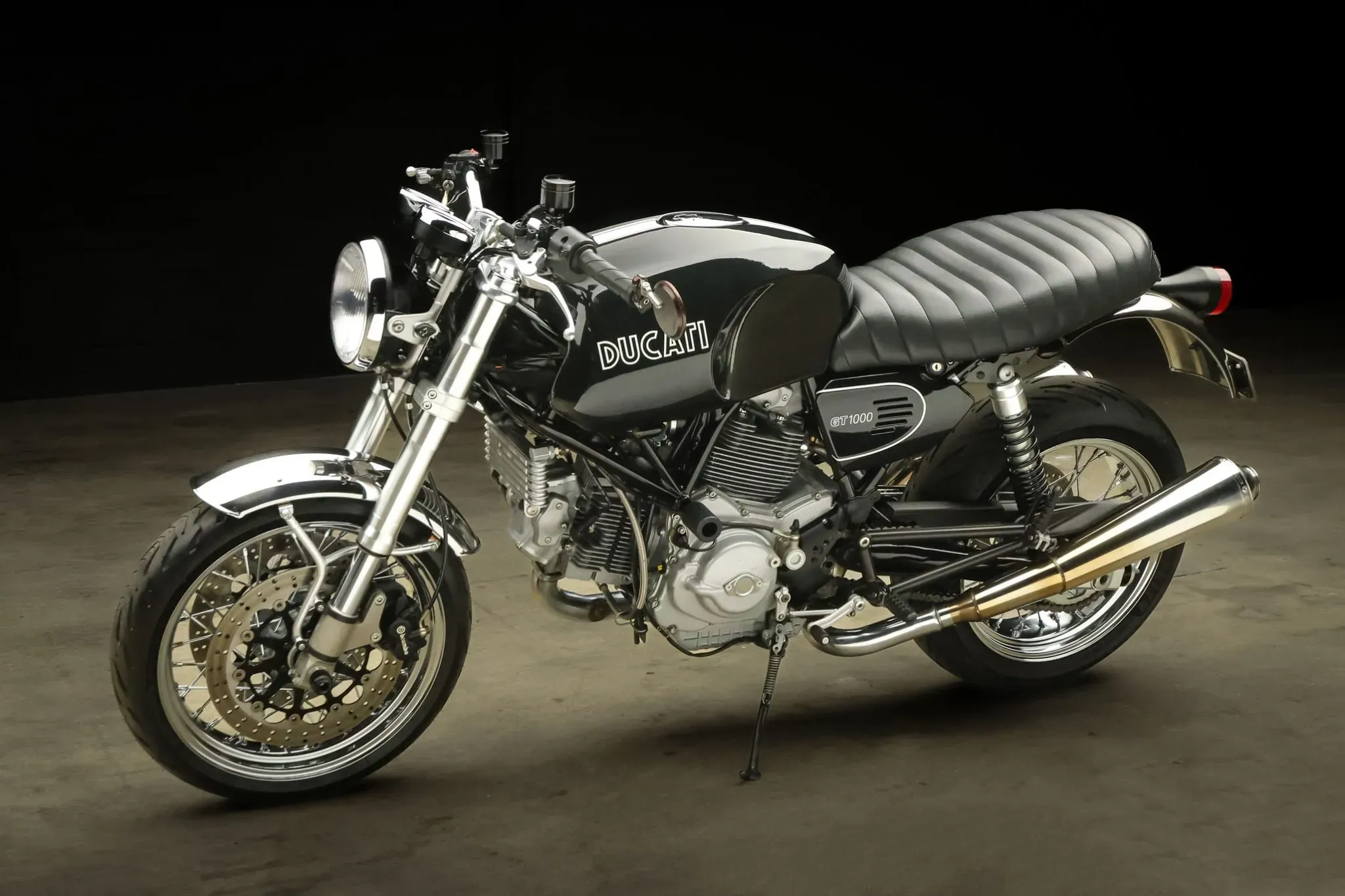
Ducati SportClassic (Sport 1000 / GT 1000)
The SportClassic family is the pure interpretation of the café racer and roadster concept according to Borgo Panigale. The Sport 1000 sported low clip-ons and a single seat, while the GT 1000 offered…
Read the full profile →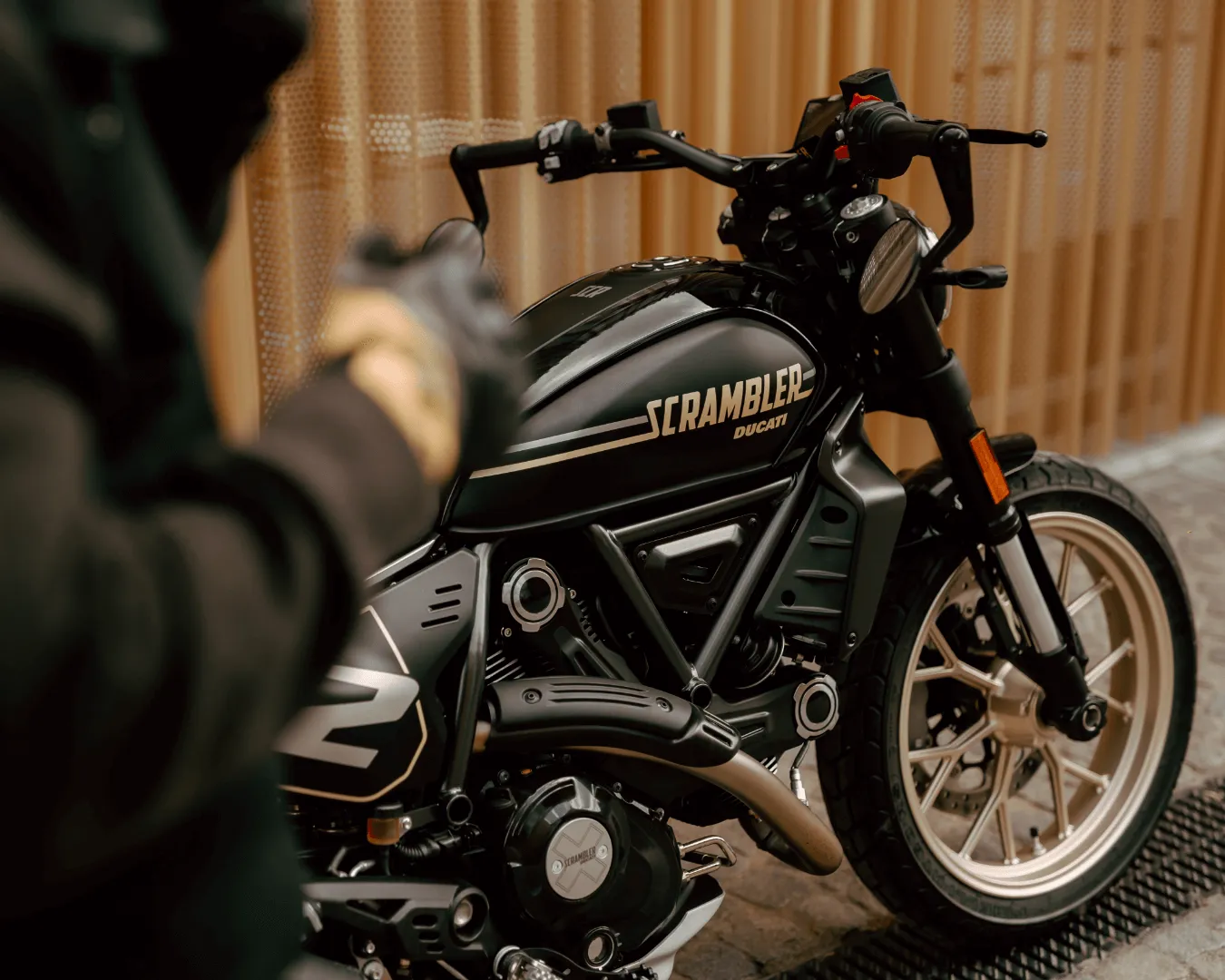
Ducati Scrambler 800
A modern reinterpretation of the historic 1970s model, it combines the retro look of the teardrop tank with the fuel-injected Desmodue engine and Cornering ABS. Fun, easy and intuitive in everyday…
Read the full profile →