
What happens to your brain when you ride a motorcycle?
The neuroscience of riding: why vintage and modern classic motorcycles can be good for your brain.
You turn the key, press the starter, and beneath the seat a piston begins to breathe. In that precise instant — long before the motorcycle moves — something has already happened inside you. It is not just a romantic feeling: chemistry, electricity and memory all spring into motion at once.
Anyone who rides a Modern Classic knows the feeling: a few seconds with the engine running, a little vibration reaching the handlebars and that distinctive burble from the exhaust are enough to make you feel a little different. Behind that sensation lies a small orchestra of neurotransmitters, motor circuits and memories firing at the same time. It is worth understanding what really happens inside our heads, because that may be where the answer lies to a question many riders have asked themselves at least once: why is it so hard to say no to certain motorcycles?
Dopamine: the reward that begins before the ride
The mesolimbic system — the group of deep brain areas that regulates motivation and pleasure — starts becoming active as soon as you open the garage door. You do not even have to set off. Sometimes it is enough to know that you will be in the saddle in a few minutes.
This is known as anticipatory pleasure: the brain starts releasing dopamine not so much because of what you are doing, but because of what it knows is about to happen. Then, once you are finally out on the road, the second part of the reward arrives, linked to the actual experience. This is how the almost automatic association between motorcycles and well-being becomes established — the one that will make you want to return to the garage the following weekend.
It is the same principle that makes many of the things we enjoy so rewarding. There is one important difference: riding a motorcycle requires attention, technique, concentration and responsibility. An addiction, if you like, but at least it is one that keeps you alert and forces you to be present.
“A motorcycle does not distract you from life: it makes you show up for it, centimetre by centimetre.”Flow state: when rider and machine become one
Psychologists call it flow: the state in which you lose track of time, your thoughts stop chasing one another, and your hands seem to know what to do before you have finished thinking about it.
Neuroscience links this state to what is known as transient hypofrontality: the prefrontal cortex — the part of the brain that normally analyses, judges, plans and, above all, overthinks — temporarily turns its volume down. Motor, visual and attentional circuits instead move to the foreground.
This may also explain why, after a hundred kilometres of bends, you can feel lighter than when you set off. You have not exactly rested — quite the opposite, you have been working hard — but for a few hours you have given your brain a break from itself. And in everyday life, there are not that many activities capable of offering something similar.
Cerebellum and muscle memory: the invisible gym
Every gear change, every carefully measured braking manoeuvre, every corner you set up and every small handlebar adjustment is, ultimately, a coordination exercise. The cerebellum refines the movement, the basal ganglia help automate it, and the sensorimotor cortex constantly monitors balance and body position through a continuous stream of information.
In other words, while you think you are simply going for a ride, you are simultaneously training attention, coordination and the ability to react to situations that keep changing.
Several studies on motor skills and complex activities suggest that continuing to perform coordinated, demanding movements can help maintain reaction times and attentional abilities. From this perspective, motorcycling is one of the few activities that brings movement, concentration, technique and pleasure together in a single experience.
Nostalgia is not weakness: it is a circuit
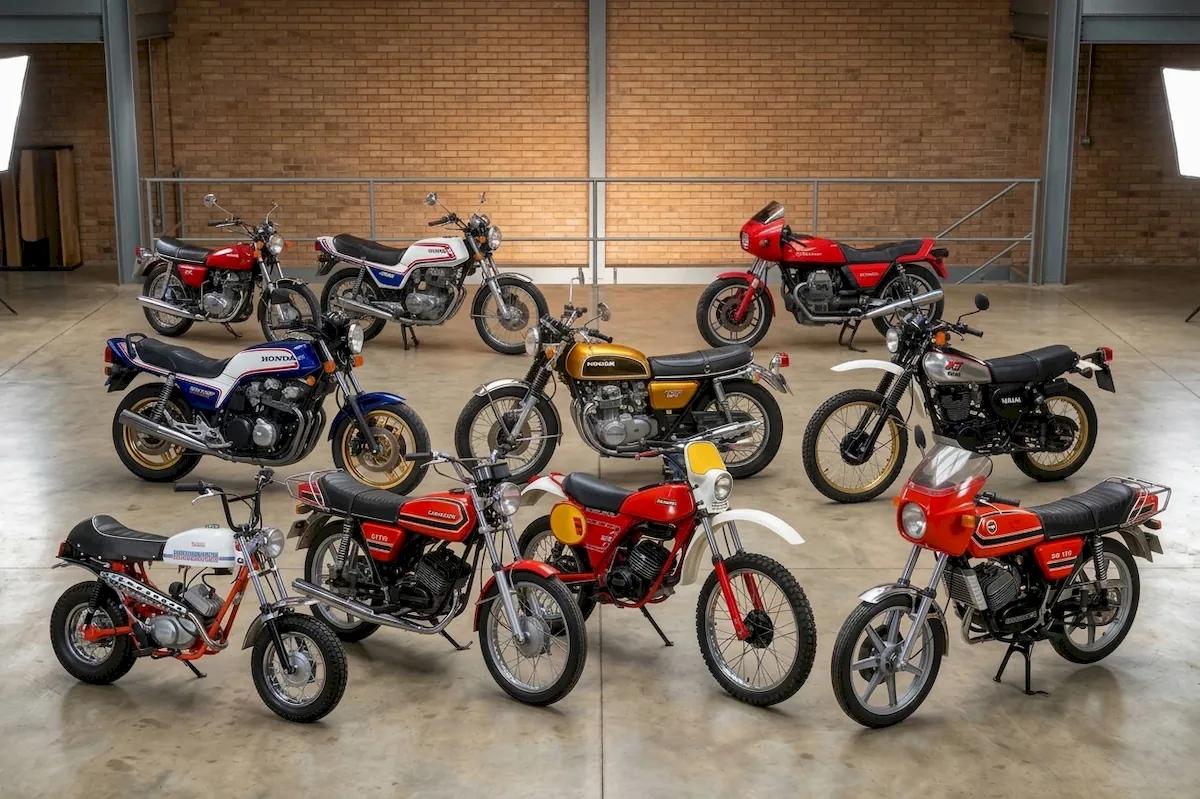
When we climb aboard a Modern Classic — a Bonneville, a Guzzi V7 or a Honda CB — we are not choosing only a motorcycle with a distinctive look. We are also choosing something that speaks directly to our memories.
The smell of petrol, the sound of an exhaust, the outline of a fuel tank or even the way an engine vibrates can be enough to bring a memory back to life. The hippocampus and amygdala, two key structures involved in memory and emotion, can turn a simple sensation into a genuine journey through time.
One moment you are in your own garage. The next, you are eighteen again, with your helmet dangling from your arm and the whole road ahead of you.
Research suggests that nostalgia is not necessarily a passive refuge in the past. It can strengthen a sense of personal continuity, help people feel less alone and contribute to a better mood. Classic motorcycles are particularly good at this: they are time machines disguised as means of transport.
The Boomer paradox: why riders often ride better at sixty
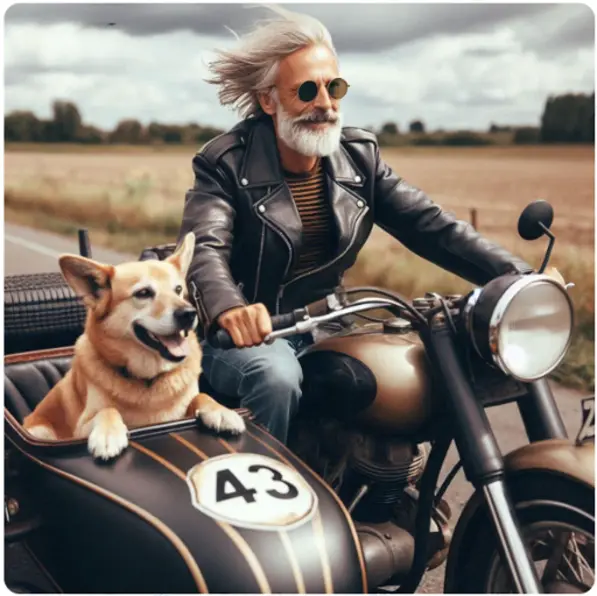
There is something that surprises people who are not part of the two-wheel world: many of the most balanced riders, and the nicest to follow in a group, are over fifty.
That is not necessarily a coincidence. Experience brings something that is often missing at twenty: the ability to read the road ahead, manage risk more effectively, recognise when it is time to wait and, above all, have the maturity to skip an unnecessary overtake.
Add decades of movements that have settled into motor memory. The result can be a rider who wastes less energy, chooses better lines and — by no means a minor detail — enjoys the ride more.
The Modern Classic then becomes almost the perfect tool: manageable torque, simple and natural ergonomics, enough performance to have fun, and styling that says something about you without shouting.
A machine that is good for the mind
Climbing into the saddle is not just about getting from A to B. It means setting in motion — quite literally — a system involving pleasure, concentration, memory, movement and attention.
For those who grew up with motorcycles from the 1970s and 1980s, there is something extra. It is an elegant way to keep a conversation going with your younger self without becoming trapped in the past. It is not about wanting to turn back time, but about carrying forward the good things that time left us.
The next time you open the garage, insert the key and start the engine, remember that you are not setting off alone. Dopamine, memory, the cerebellum and perhaps thirty years of memories are climbing into the saddle with you.
Not bad for what you had planned as a simple Sunday ride.