

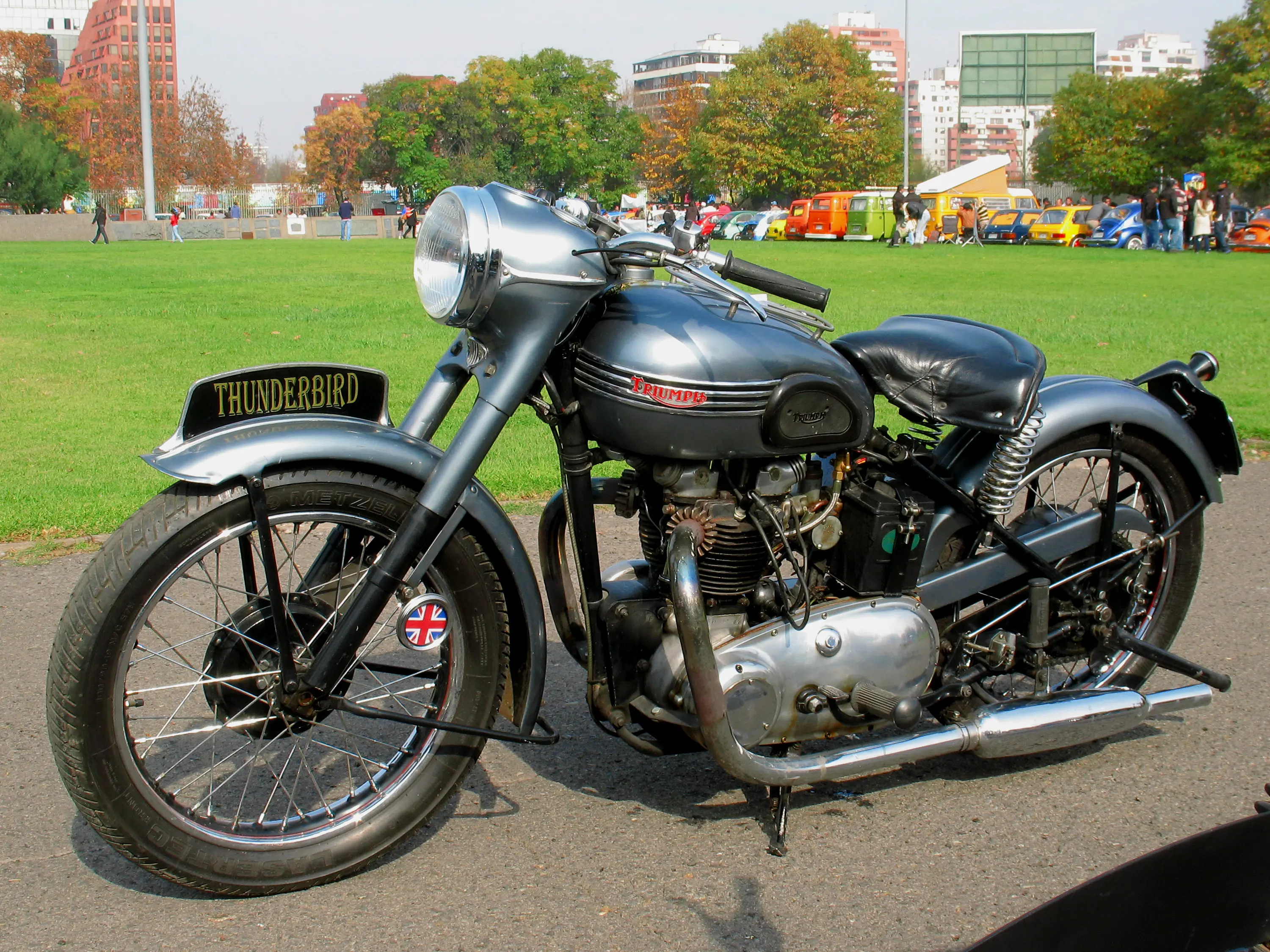
Triumph Tiger T100: The Story of the British Sports Twin
Triumph · 1950-1974 · 498 cc (4-stroke parallel twin)
Description
Features and technical evolution
The Sporting, Versatile Soul of Meriden. The Tiger T100 was a technology lab for the development of lightweight materials:
• Cutting-edge aluminium alloy cylinder head: introduced to replace the old cast iron, it brought a considerable weight saving and allowed a safe increase in compression ratio.
• Domed light-alloy pistons: designed to improve combustion efficiency and throttle response.
• Front telescopic forks: developed to deliver directional precision on both tarmac and gravel roads.
Its specs made it extremely agile, with a dry weight lower than its direct rivals of the same capacity.
Historical context
Born from the ashes of the post-war period as the sporting evolution of the successful Tiger 80, the Triumph Tiger T100 established itself from the start as the British marque's definitive sporting middleweight. Designed for riders looking for the perfect compromise between everyday use and Sunday racing, the T100 stood out for lightning-quick handling and outstanding performance on city circuits and in hill climbs. Its incredible versatility also made it one of the favourite platforms for pioneers of light off-road and track racing in the United States.
Main versions
1. Tiger T100 Pre-Unit (1950-1959): with separate crankcases, recognisable by its classic tank with metal grille badges.
2. Tiger T100SS and T100R Daytona (1960-1974): updated versions with a "unit" engine. The "Daytona" in particular, fitted with twin carburettors, celebrated the team's historic victories at the famous American race.
Trivia and anecdotes
According to Edward Turner's philosophy, the "T100" designation indicated the bike's theoretical top speed in miles per hour (about 160 km/h). In the official tests of the time at the Brooklands circuit, many private riders managed to break that psychological barrier simply by removing the silencers and fitting racing carburettors.
What to check before buying one
Given the very long production run and the many evolutions, market value varies considerably depending on the year and the faithfulness of the restoration.