

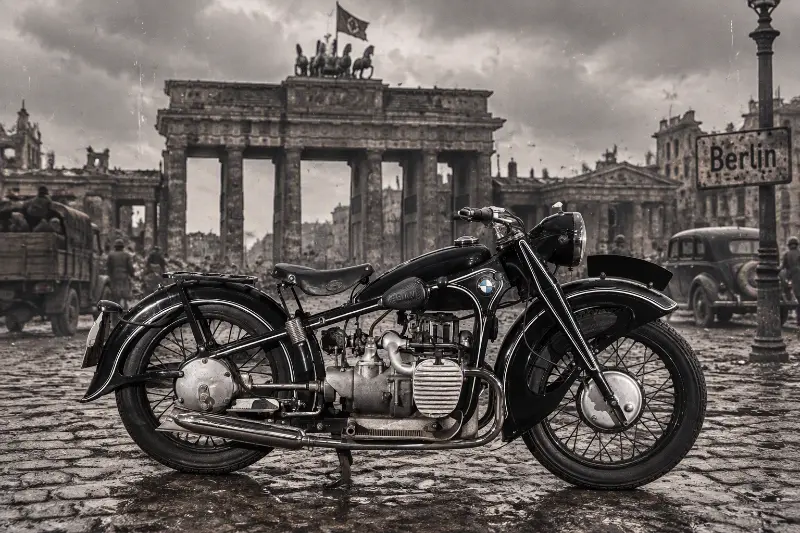
BMW R12 (1935–1942): History, Specs and Value of the Bike with the First Hydraulic Fork
BMW · 1935-1942 · 745 cc
Features and technical evolution
The 1935 BMW R12 is an absolute milestone: it was the world's first production motorcycle fitted with a hydraulic telescopic front fork. But it is not only a technical first: it is also one of the most fascinating pre-war BMWs, with its side-valve boxer and the identity of a true road bike.
About the bikeThe lines are typical of the 1930s: teardrop tank, long seat, deep mudguards and the boxer sticking out at the sides. The 745 cc side-valve engine produced 18 bhp — little by our standards, but adequate for the time — with useful torque and smooth running. The big novelty was at the front: the hydraulic telescopic fork, which offered comfort and roadholding unthinkable with the girder or rigid-plate forks of the past.
Technical data- Engine: side-valve boxer twin 745 cc
- Power: 18 bhp
- Gearbox: 4-speed sequential; shaft drive
- Top speed: approx. 110 km/h (68 mph)
- Hydraulic telescopic front fork (an absolute first as standard)
- Rear suspension: rigid with shock absorbers
- Brakes: front and rear drum
- Production: approx. 36,000 units
The hydraulic telescopic fork is the novelty that counts: born from BMW's studies, it immediately became the industry standard and marks the passage from craft motorcycling to the modern kind. Comfortable, stable, simple to produce: a masterpiece of applied engineering.
ConclusionThe R12 has the rare merit of having been modern ninety years ago and of still being so today, at least in concept: hydraulic suspension, comfort, reliability. For anyone studying motorcycle history, it is an essential stop.
Historical context
The mid-1930s are the golden age of BMW motorcycles: the marque has just won the world championship with the supercharged racer and is transferring technology from racing to production. The R12 was born in this climate, alongside its sporting sibling the R17 (with overhead valves). It is the bike for those who want modern technology without the complexity of competition.
Main versions
- R12 (1935–1942): single version with side-valve engine.
- R17: sporting sibling with overhead valves, not a version of the R12 but a distinct model.
- During the war, production was directed mainly to the armed forces.
Trivia and anecdotes
The R12 was also a military bike par excellence: many examples were requisitioned or built for the German army, and survive today with period equipment and markings that tell their story.
What to check before buying one
It is an important collector's bike, above all for its technical first. The market rewards original or documented restored examples; the rarity of specific parts and the delicacy of pre-war mechanics make it a choice for experienced collectors, not for a first vintage purchase.