

Preparing Your Motorcycle for Winter: What to Do Before Storage
Before you cover the bike and say goodbye until spring, give it an afternoon. Washing, chain, battery, tyres, fluids and a few extra checks can save you from nasty surprises on the first ride.
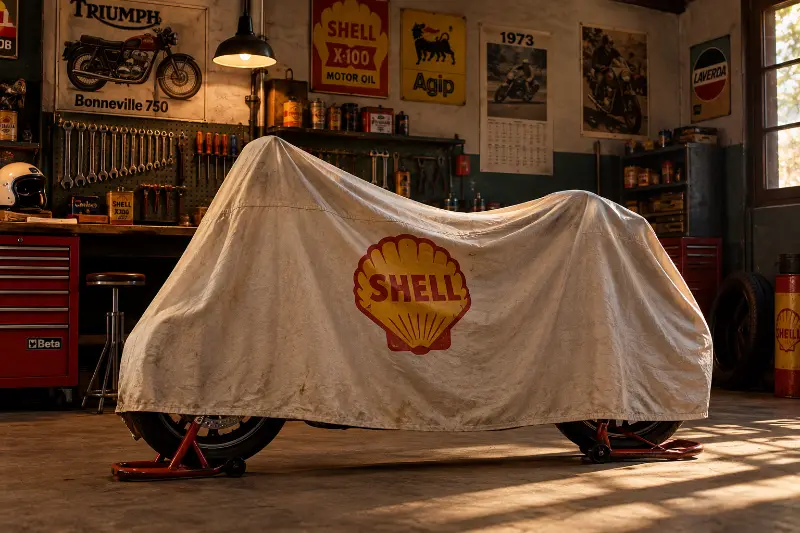
Sooner or later comes that afternoon when you look at your motorcycle and realise it is time to put it away for a few weeks. The days get shorter, the temperature drops and the urge to pull on your gloves and helmet for an impromptu ride starts to fade.
This is the time for winter motorcycle preparation.
And here there is a very common temptation: park the bike in the garage, throw the cover over it and put everything off until spring.
We have all done it at least once.
The problem is that a motorcycle does not really "go to sleep" just because we have covered it. Dirt, damp, battery, tyres, chain and fuel keep doing their work even while we are sitting in front of the fire.
That is why I prefer to dedicate an afternoon to the bike before putting it under the cover for good. You do not necessarily need a mechanic's skills. Mostly you need a bit of order and a few checks done calmly.
The reward comes a few months later, when we lift the cover and find a motorcycle ready to go again.
Wash it well. And above all, dry it
The first step is perhaps the simplest: washing the motorcycle.
Before storage you need to remove dirt, mud, insects, oily residue and, above all, any traces of salt if the bike has been used in winter or on roads where de-icing products are used.
Do not limit yourself to the parts you can see.
The swingarm, wheels, engine area, stand, mudguards and all those small spots where dirt collects deserve a little extra attention.
After washing comes the part that is often underestimated: drying.
A wet motorcycle under a cover is not a protected motorcycle. It is a small greenhouse for damp.
Dry it carefully and, if possible, leave it for a while in a dry, ventilated place. Pay particular attention to hidden areas, where water can linger longer.
With a vintage bike I would be even more scrupulous. Chrome, nuts and bolts and exposed metal parts deserve more attention than on a modern motorcycle designed to cope with everyday use without too much trouble.
Chain: cleaned and lubricated before it sits
If your motorcycle has chain drive, this is the right time to deal with it.
A dirty chain, with dust and damp on it, certainly will not improve over months of inactivity. Before parking the bike for a long time it is therefore a good idea to clean it with suitable products and then lubricate it.
While you are at it, take a look at the general condition of the drivetrain.
Check that there are no obvious problems, that the chain shows no signs of abnormal wear and that the rear sprocket and front sprocket are in a condition consistent with normal use.
There is no need to turn winter storage into a full overhaul of the motorcycle. But if there is something you noticed on your last rides, this is a good moment to make a note of it.
Spring is not the ideal time to discover that the chain needed checking months earlier.
Fuel: better not to leave it to chance
Here we need to distinguish between modern and older motorcycles.
On modern fuel-injected bikes that will sit for a few months, fuel management should follow the manufacturer's recommendations. For prolonged storage, a specific fuel stabiliser may be worth considering, especially when the bike will stay unused for a long time.
With a vintage motorcycle or one with carburettors, things can change. Old fuel can cause problems in the fuel system, and some storage procedures call for specific work on the carburettors.
So there is no universal rule of the "always do this" kind.
The most sensible advice is to check your motorcycle's manual and consider how long the period of inactivity will really last.
One thing, though, I would always do: do not leave the subject of fuel completely forgotten.
Battery: do not wait for spring
The battery is probably one of the first things we think about when, after months, we try to start a motorcycle again.
And that is often exactly where the surprise comes.
If the bike will be standing for a long time, check the condition of the battery and consider the solution recommended for your model. In some cases it may be right to disconnect it; in others it is more practical to use a compatible battery maintainer (trickle charger).
Here too there are no universal solutions: follow the manufacturer's instructions and use devices suited to the type of battery.
If you have a modern bike with electronics, an immobiliser and other devices that keep drawing power even when parked, checking the battery becomes even more important.
And if you have an old bike with a traditional battery, do not assume you can simply forget about it for four months.
Tyres: those contact points with the floor
Before parking the motorcycle for good, check the tyres.
Check the pressure and general condition and bring them back to the values indicated by the manufacturer.
A motorcycle that sits for months almost always rests on the same spots on its tyres. For this reason, where possible and appropriate for the type of bike and storage, you can use paddock stands to lift the wheels.
But it is not a competition to see who can lift the most things off the ground.
If you do not have suitable stands or do not know how to use them correctly, it is better to leave the bike resting on a stable footing and check the pressure periodically.
The important thing is not to forget about the tyres completely until spring.
When the first ride of the year comes, a quick pressure check will be essential anyway.
Oil and fluids: check first, replace when needed
Storage is also a good moment to look at the level and condition of the main fluids.
Check the engine oil and see when the next change is due according to your motorcycle's service schedule.
If the oil change is already close, it may make sense to do it before the layoff. But there is no need to change everything automatically just because winter is coming.
Also check the coolant on liquid-cooled bikes and the brake fluid, looking for any faults, leaks or levels outside the norm.
On a vintage bike, a small leak that we may have ignored during the summer deserves even more attention.
Storage should not be about inventing unnecessary maintenance. It should be about putting the motorcycle in the best condition for the period of inactivity and, above all, not putting off problems that are already obvious.
Chrome, bolts and metal: protect them from damp
Here we come to one of the parts I like most on classic motorcycles.
Chrome, nuts and bolts, exhausts, metal parts and the details that tell the age of the bike need to be looked at carefully.
Once cleaned and dried, you can protect exposed surfaces using specific products compatible with the material.
Do not spray protective products indiscriminately on every component.
Brakes, tyres, discs and surfaces where friction is needed must stay clean and free of substances that could compromise how they work.
With vintage bikes a simple rule applies: better to prevent corrosion than to fight it in spring.
Exhaust and air intakes: a small check that can avoid problems
During a long layoff it is also worth checking the openings of the motorcycle.
The exhaust, air intakes and other accessible areas can become an entry point for damp, dust or, in less frequently visited garages, small animals.
If you use a specific protection for the exhaust, remember one fundamental thing:
BEFORE STARTING THE MOTORCYCLE, REMOVE ANY PROTECTION OR PLUG FITTED DURING STORAGE.
Write it on a small reminder next to the keys if necessary.
It is one of those trivial things that after four months we can quite easily forget.
Where to park the motorcycle during winter
The perfect garage does not exist, but a few precautions help.
The ideal is a dry, preferably ventilated place that is protected from the weather.
A closed garage is certainly different from an open lean-to, but even an unheated lock-up can be a valid solution if it has no problems with damp and condensation.
When possible, avoid leaving the bike directly on constantly damp surfaces.
And above all, do not assume that "garage" automatically means "dry environment".
If you often find condensation on the walls, a damp smell or water on the floor, the motorcycle will notice sooner or later.
The cover must not become a trap
At last we come to the cover.
The cover is useful, but it has to be the right one.
It is better to use a cover suitable for motorcycle storage and, above all, breathable. The aim is to protect the bike from dust without trapping moisture.
Never cover the bike as soon as it is back from a ride, when the engine and components are still hot.
Wait for it to cool completely, make sure it is dry and only then cover it.
Here too there is a small rule I have always found it worthwhile to follow: the cover must protect the bike, not hide what is happening underneath.
If the garage is subject to damp, it is worth checking on things every now and then.
One last check before closing the garage
At this point I always do a final general check.
Is the motorcycle clean and dry?
Has the chain been lubricated?
Are the tyres at the correct pressure?
Has the battery been dealt with?
Have fuel and fluids been checked?
Are there metal parts that deserve protection?
Is the garage in the right condition?
Is the cover breathable and fitted properly?
And above all: is there anything that, during the last rides, made me think "I need to fix that"?
If the answer is yes, write it down.
A small list left with the keys can be far more useful than it seems.
The winter motorcycle storage checklist
Before putting the motorcycle under the cover for good:
- ☐ Complete wash
- ☐ Thorough drying
- ☐ Chain cleaned and lubricated
- ☐ General drivetrain check
- ☐ Tyres checked and pressure verified
- ☐ Battery checked
- ☐ Battery maintainer, if appropriate
- ☐ Fuel managed according to the manufacturer's instructions
- ☐ Oil and fluids checked
- ☐ Metal parts and chrome protected
- ☐ Exhaust and air intakes checked
- ☐ Garage dry and adequately ventilated
- ☐ Breathable cover
- ☐ Any jobs to do in spring noted down
You will find that afternoon again in spring
In the end, that is all there is to it.
Your winter motorcycle preparation does not necessarily need a whole day in the workshop. Mostly it needs an afternoon without rushing.
A sponge, a few specific products, a battery check, a look at the tyres, a little lubricant on the chain and that small dose of attention that is often missing when our minds are already on spring.
Because the point is not simply to preserve a motorcycle.
It is to find it in good shape again.
And when one of the first mild days arrives, when the sun starts warming the tarmac again and that urge to pull on the helmet without thinking too much comes back, it will be good to take off the cover, turn the key and know you did things properly.
Spring, after all, starts this way too.